
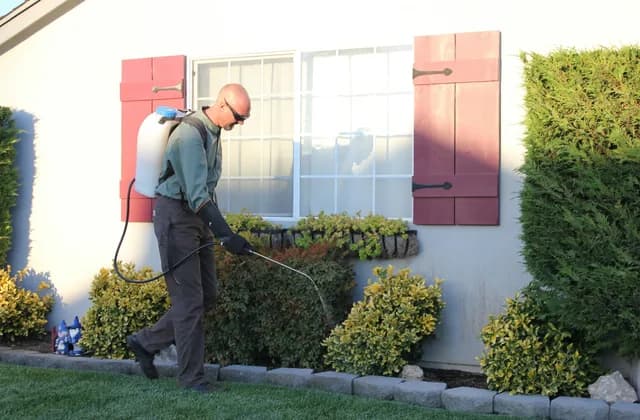
Most people start looking for pest control after the second or third sign: droppings behind the cooker, scratching in the ceiling at night, ants that come back however often you wipe the counter. That is when you want someone fast, and when it is easiest to choose badly. This guide covers how to choose a pest control company in the United States and the United Kingdom: what a proper visit looks like, which licences and qualifications to check, how to keep children and pets safe, and the red flags that should make you walk away.
One thing is the same on both sides of the Atlantic: a good company does not start by spraying. It starts by looking.
What a good company does first: inspect, then treat
Professionals call the approach integrated pest management, or IPM. It is the best yardstick you have for judging any company, and it has four steps.
- Identify. Which pest is it, and how far has it spread? Mice, rats, cockroaches, bed bugs and carpet beetles are all treated differently, so a guess wastes time.
- Find the cause. How are they getting in, and what keeps them there: gaps around pipes, a damaged air brick, a leak, food in open packets.
- Treat in a targeted way. Bait, traps or products placed where the pest lives and travels, not a blanket spray across every room.
- Follow up. A return visit to check it worked, adjust the treatment, and remove bait or traps at the end.
After each visit you should get a written report: what was found and where, what was used (product name and active ingredient), where bait or traps were placed, what you need to do, and when they are coming back. A company that will not write this down is asking for trust without giving you anything to check.
How to choose a pest control company in the United States
The state licenses the people. Pest control businesses and the technicians who apply pesticides are licensed or certified by the state, usually through the state department of agriculture and in some states through a structural pest control board. Most states offer an online licence search. Ask for the company’s licence number and the name of the technician who will actually come, and look up both.
The federal government regulates the products. Most pesticides must be registered with the Environmental Protection Agency and carry an EPA registration number on the label. The label’s directions are legally binding, which is what the trade means by “the label is the law”: a product may only be used on the pests, in the places and in the way the label allows. Ask for each product’s name before treatment so you can read the label yourself.
Read the service agreement. It should say what is being treated, how many visits are included, what happens if the pest returns between visits, whether it renews automatically and how to cancel. If there is a warranty, find out whether it covers re-treatment only.
Termites are their own conversation. Where they are common, a wood-destroying insect inspection is often part of buying or selling a home, and companies may offer a termite bond: an ongoing contract with regular inspections. Before signing, ask whether it covers re-treatment only or repair of new damage too, what you must do to keep it valid, and whether it transfers if you sell.
Renting? It depends on your state and city. Many places treat a serious infestation as a habitability problem for the landlord, and some cities have specific bed bug rules. Report the problem in writing, keep a copy, and check your lease and local housing code before paying for treatment yourself.
How to choose a pest control company in the United Kingdom
There is no general licensing scheme a UK company must join before offering household pest control, so the checks that matter are qualifications and trade body membership.
- Trade body. Membership of the British Pest Control Association (BPCA) or the National Pest Technicians Association (NPTA). Confirm it on the association’s own website rather than trusting a logo on a van.
- Qualifications. A recognised Level 2 qualification in pest management, such as the RSPH or BPCA award, plus ongoing training, which many technicians record on the BASIS PROMPT register.
- Restricted products. The strongest rodenticides are for trained professional users under the UK’s rodenticide stewardship scheme. A company using them should be able to tell you what they are and why they are needed.
Check your council. Some councils still run a pest control service for residents; others have stopped or cover only certain pests. A minute on the council’s website may settle it before you ring round.
Renting? It depends on your tenancy and the cause. Disrepair, such as a broken air brick or a damaged drain, usually points to the landlord; a problem caused by how the home is kept may be yours. Social tenants should report it to their council or housing association first. If a private landlord will not act, the council’s environmental health or private housing team can inspect. Rules differ between England, Scotland, Wales and Northern Ireland.
| Check | How to verify | United States | United Kingdom |
|---|---|---|---|
| Licence or qualification | Ask for the number or certificate, then look it up yourself. | State licence for the company and the technician; use the state agency’s online search. | No general licence; ask for a recognised Level 2 pest management qualification. |
| Trade body | Search the association’s own member list, not the logo on the van. | Voluntary: the NPMA or your state pest management association. | BPCA or NPTA membership. |
| Insurance | Ask for a certificate or policy document in the company’s name. | General liability insurance. | Public liability insurance. |
| Products | Get product names and active ingredients in writing before treatment. | EPA registration number on the label; the label is the law. | Strongest rodenticides restricted to trained professionals. |
| Agreement and report | Read visits, renewal and cancellation terms; ask for a report after every visit. | Written service agreement; termite bond terms if offered. | Written quote and guarantee terms, including follow-up visits. |
Say which pest, what you are seeing, the type of property and your town or neighbourhood. People nearby who do pest control work can apply or message you, and you decide who to hire.
Post a free job →Pest control for mice and rats: what they actually do
Rodents are the most common reason people call a professional, and a proper job follows the same pattern in both countries.
The signs
Droppings along skirting boards and in cupboards, gnawed packets or cables, dark greasy marks along walls, shredded paper or insulation used for nesting, a musty smell, and scratching in walls or ceilings at night. Rats also leave burrows and runs outside, often near bins, sheds and drains.
Proofing
Poison alone does not fix a rodent problem, because new ones walk in through the same gap. A good technician spends real time on proofing: where pipes and cables enter the building, under doors and behind kitchen units, damaged air bricks and vents, and defective drains, a common route for rats. They should seal what they can and tell you exactly what else needs sealing, and with what.
Bait stations and traps
Rodenticide belongs inside locked, tamper-resistant bait boxes, fixed in place, labelled and out of reach of children and pets. Loose pellets behind the sofa are a red flag. With small children or pets at home, ask whether traps can be used instead of, or alongside, bait, and ask for a list or sketch of where every station is.
Follow-up visits
Expect more than one visit. The technician comes back to check how much bait has gone, move stations if needed and check the proofing, then removes the bait and any dead rodents once activity stops. Ask at the start how many visits are included and what counts as solved.
Safety before and after treatment
These products are designed to kill living things, so a careful company treats safety as part of the job:
- Written preparation instructions before the visit, including how long everyone stays out and how to ventilate afterwards. Follow the company’s written times, not a rule of thumb.
- Children, pregnant family members and pets kept out of treated rooms as instructed. Cover fish tanks and switch off air pumps if told to; fish are very sensitive to many insecticides.
- Food, dishes, cutlery, pet bowls and toothbrushes put away or covered before treatment.
- The product name and active ingredient in writing, so you can check the label and tell a doctor or vet exactly what was used.
- Bait only in locked, labelled boxes. Pets and wildlife can be harmed by eating a poisoned rodent, so dead rodents should be removed promptly.
If someone may have been exposed: if a child or pet may have eaten bait or come into contact with a product, do not wait to see what happens. Keep the label or product name to hand and contact poison control or emergency services in the US, or NHS 111 or emergency services in the UK. For a pet, call a vet.
DIY or professional: where the line is
For a small, early problem, prevention does most of the work: food in sealed containers, crumbs and pet food cleared at night, leaks fixed, obvious gaps sealed, and a snap trap for a single mouse. Many year-round contracts sell exactly this, so be honest about what you would be paying for.
Call a professional when signs keep coming back despite prevention, when it is rats rather than a lone mouse, when you suspect bed bugs, termites or other wood-destroying insects, when a wasp nest is somewhere hard to reach, or when you live in a flat and the problem is shared. Some shop-bought sprays scatter pests such as bed bugs and cockroaches into new hiding places, which makes professional treatment harder.
Red flags
- No inspection: a treatment plan and a quote over the phone before anyone has seen the problem.
- Pressure: sign today, a doorstep offer that expires tonight, or a long contract presented as the only option.
- No names, no paper: refusing to name products or put anything in writing.
- One spray fixes all: no word about entry points or follow-up.
- Loose bait: pellets in open trays or unlabelled containers where children and pets can reach them.
- Credentials that do not check out: a licence under a different name in the US, or a trade body logo the association cannot confirm in the UK.
Using Hirovo to find someone
Posting a job on Hirovo is free. Your post appears in the job listings for your country and area, such as those for the United States or the United Kingdom, where people and businesses nearby who do this work can see it, apply or message you in the app. You decide who, if anyone, to hire. Hirovo does not verify licences, qualifications, insurance or applicants and is not the service provider, so the checks in this guide are yours to make.
In the post, describe the pest, what you are seeing and the type of property (flat, house, shop), plus the town or neighbourhood. Leave out your full address and share it by message with the person you choose. For help with the wording, see how to write a job post; for vetting anyone who works on your home, see how to hire a contractor.
In short
Choose the company by the visit, not the sales pitch: inspection first, entry points found, targeted treatment, a follow-up and a written report. In the US, look up the state licence and ask for EPA-registered product names and a written agreement. In the UK, look for BPCA or NPTA membership and a recognised qualification, and check your council. Everywhere, keep bait locked away from children and pets, and walk away from anyone who will not explain what they are doing.