
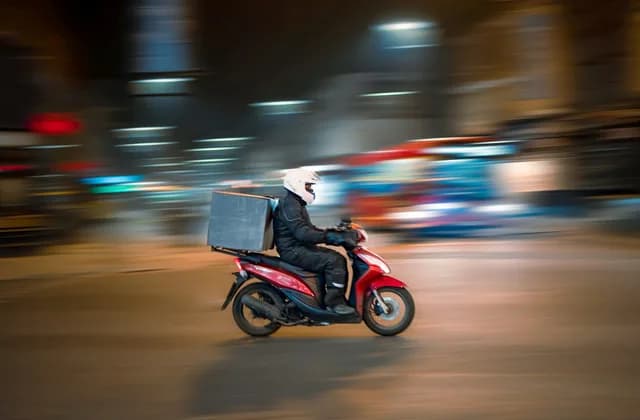
Three delivery adverts, three completely different jobs behind the same words. A Phoenix parcel contractor offers “$21/hr, company van, W-2, 4-day week”. A London courier company offers “self-employed, £1.10 per parcel, own van, hire and reward insurance required”. A Lagos logistics firm offers “dispatch riders, company bike, LASDRI required, monthly pay plus per-delivery bonus”. The licence is the easy part in all three. What separates a good round from a bad one is your employment status, who pays for the vehicle, and whether you are actually insured for the work you are doing.
What follows is the market-by-market version of those three questions, then the parts that are common everywhere: route density, apps and proof of delivery, what the vehicle really costs, and how to write an application that a transport manager reads in five seconds.
United States: W-2, 1099 and the insurance gap in between
A standard state driver’s licence covers cars and light vans; a commercial driver’s licence is only needed above the commercial weight thresholds, so parcel and food delivery need no special licence. The important question is who employs you.
| Arrangement | How you are paid | What you carry |
|---|---|---|
| Employed van driver (W-2) | Hourly, with overtime beyond 40 hours in a week; often a company van and fuel card. | Little. Employer carries the vehicle, insurance and workers' compensation. |
| Delivery service partner driver | Employed by a small contractor, not the retailer whose branding is on the van. Hourly, with the contractor’s own terms. | Your job depends on the contractor keeping its route contract. |
| Gig app driver (1099) | Per delivery plus tips, no overtime, no unemployment insurance; self-employment tax on both halves of Social Security. | Vehicle, fuel, maintenance, depreciation and a commercial or delivery insurance endorsement. |
The insurance gap is the part that costs people their savings. A personal auto policy excludes carrying goods for payment; the platform’s contingent liability cover typically applies only while a delivery is active, and often not while you are waiting for the next order. A commercial policy or a rideshare-and-delivery endorsement is what closes it. Ask the platform or the contractor exactly what is covered and when, and read the answer against your own policy.
Some jurisdictions have added minimum pay rules for app delivery workers, notably New York City and Seattle, and classification litigation continues in several states. If you drive in one of those markets, look up the current rule; it can be worth several dollars an hour. US openings on Hirovo are grouped by county: courier jobs in Los Angeles County, Maricopa County (Phoenix) and Miami-Dade County are three of the busiest.
Create a free Hirovo profile, add driving and courier work to your skills and set your location. New posts near you appear on their own, so you are not scrolling through platform adverts every morning.
Create a free account →United Kingdom: worker status, and the insurance that is not optional
A category B licence covers vans up to 3.5 tonnes, which is nearly all parcel and multi-drop work. Driver CPC applies to lorries and buses, not to your van. Two other things decide the job.
Hire and reward insurance
Carrying goods for payment requires hire and reward cover. A private policy, and even ordinary business use, excludes it. Driving a round without it means any claim is refused and you are committing the offence of driving without insurance, which carries penalty points and possible disqualification. Courier policies are more expensive than private ones and the premium is a real cost of self-employed parcel work. Get the quote before you accept a per-parcel rate, not after.
Self-employed, worker or employee
Most parcel networks engage drivers as self-employed owner-drivers or through delivery partner companies. The Supreme Court’s 2021 decision on Uber drivers established that a platform’s label does not settle the question: where the platform controls the work, the driver is a worker, entitled to the National Living Wage and paid holiday. Other platforms and courier networks have been litigated separately, with different outcomes depending on their contracts, so your status depends on the terms and the reality of the control. If you are genuinely self-employed, register for self-assessment, keep records, and claim allowable expenses including fuel, insurance, maintenance and either mileage at the approved rate or actual running costs.
The costs that eat a per-parcel rate
Fuel, the courier insurance premium, tyres, servicing, MOT, depreciation and van rental if you do not own one. Add the London ULEZ daily charge and the congestion charge if you work in the capital with a non-compliant vehicle. A rate per parcel is only comparable to an hourly job after all of that comes off. Ask the depot what the average drops per day and the average round mileage are; density is what decides whether the round pays.
UK openings on Hirovo are listed by county or borough: see courier jobs in Greater London, Birmingham and Surrey.
Nigeria: dispatch riding, the papers, and who owns the bike
Most delivery work in Nigeria moves on two wheels. Dispatch riders serve e-commerce, food platforms, pharmacies, banks and document couriers, and the job is defined by three things: the state’s rules on commercial motorcycles, your papers, and whether the machine is yours.
In Lagos, commercial motorcycle operation is restricted on many major roads and in a number of local government areas, with enforcement that has included impounding machines. Registered logistics and dispatch companies operate under state registration and exemptions, which is the practical reason to ride for a registered firm rather than independently. Riders are expected to hold a valid rider’s licence, a LASDRI card from the Lagos State Drivers' Institute, current vehicle registration and insurance, and an approved helmet. Rules change and enforcement varies; check the current position with the state authority rather than relying on what other riders say.
The second question is ownership. A company-owned bike with fuel and maintenance provided is a job. A hire purchase arrangement, where deductions from your earnings eventually buy the machine, can be a genuine route to owning an asset or a trap that keeps you working to service the deduction while repairs come out of your pocket. Before signing, ask for the total amount payable, the deduction per week, who pays for repairs and what happens to your payments if you leave or the bike is stolen or impounded. Get it in writing. As in every Nigerian trade, formal employers pay monthly through payroll, remit pension contributions and give written terms within three months as the Labour Act requires; informal ones do none of that.
Cash on delivery adds a third layer: you are carrying the company’s money as well as its parcels, so confirm the reconciliation process and who bears the loss for a robbery before you start. Nigerian openings on Hirovo are grouped by local government area: dispatch rider jobs in Kosofe, Lagos, courier jobs in Port Harcourt and Uvwie (Warri), Delta State.
The round decides the job far more than the title does
“Delivery driver” covers at least five different working lives.
- Multi-drop parcels. 100 to 200 stops a day on a fixed round, early start, finish when the van is empty. Density decides everything: an urban estate round and a rural round with the same drop count are different jobs.
- Food delivery on apps. Short trips, evenings and weekends, per-job pay plus tips, complete flexibility and complete unpredictability. Vehicle costs land on you.
- Same-day and courier work. One item, one destination, often urgent and business-to-business. Better rates per job, more waiting, more dependence on a controller who likes you.
- Grocery and pallet delivery. Fewer stops, heavier loads, tail lifts and cages, often a set route with a time window. More physical, usually employed and hourly.
- Dispatch riding. Motorcycle, urban, high volume, weather-exposed. The dominant model in Nigeria and growing in food delivery everywhere.
If you are new, an employed hourly round teaches the systems and the discipline without putting the vehicle risk on you. If you want the highest gross earnings, self-employed multi-drop and same-day work pay more per hour worked, and cost more to run; only the net figure is comparable.
What the job actually costs, and how to compare two offers
Delivery is the trade where the headline rate is least informative, because the costs move between the employer and you depending on the arrangement.
Who supplies the vehicle and the fuel. A company van with a fuel card is worth a large sum a year that a per-parcel rate has to replace before it is even comparable. If you supply the van, add rental or depreciation, insurance, servicing, tyres and repairs.
Route density, not drop count. Ask for average drops per day and average round mileage. 160 drops within four postcodes is a good round; 110 drops across a county is a long unpaid day.
Waiting time and returns. Depot loading time, waiting at restaurants and returning undelivered parcels are hours you work. Ask whether they are paid, because in per-drop models they usually are not.
Tips and bonuses are variable, base is not. Overtime, holiday pay and any future rise are calculated on the base in employed roles; in self-employed models there is no holiday pay at all, so build it into the rate you accept.
Nobody legitimate charges you for the chance to work. Not a “vehicle deposit” for a van or bike that never materialises, not a training or induction fee, not an agency registration fee, not a uniform or scanner deposit, and not a payment refunded after your first month. Be especially careful with any arrangement where money leaves your account before any work starts: this is the most common scam pattern in delivery recruitment in all three markets. A hire purchase deal on a bike is a different thing, but only when the total payable, the weekly deduction, the repair liability and what happens if you leave are all written down before you sign. And never send your licence, ID, bank details or a photograph of yourself holding your ID before a verified written offer from a company whose registration and address you have checked.
An application a transport manager can read in five seconds
Whoever screens your application has a round going out at 07:00 tomorrow with nobody on it. They want to know whether you can drive it legally. Put that in the first four lines.
- Line one: licence class, how long held, and your record. US: state and licence class, plus any endorsements. UK: category B, years held, and points if any, because insurers price on them. Nigeria: rider’s or driver’s licence, LASDRI card, and vehicle papers.
- Line two: insurance and vehicle. Whether you hold hire and reward or a commercial delivery endorsement, and whether you have your own van or bike. This is the line that separates you from applicants who cannot start.
- Line three: the work you have done, in numbers. “Multi-drop, 140 drops a day, 18 months” or “Same-day courier, business-to-business, 2 years” tells a manager where you fit. Platform names alone do not.
- Line four: area knowledge and availability. The postcodes or local government areas you know, and the days and start times you can commit to.
- Line five: proof-of-delivery systems and cash handling. The apps and scanners you have used, and whether you have handled cash on delivery and reconciled it.
- Finally, a controller or depot manager who will give a reference. Delivery is a trade where reliability is the entire product; a named referee who says you turned up beats anything else on the page.
When things go wrong: accidents, missing parcels and safety
Delivery is the trade where the difference between employment models shows up most sharply at the worst moment, so it is worth knowing the answers before you need them.
If you are injured. An employed driver is covered by workers' compensation in the United States, by employer’s liability insurance in the United Kingdom and by the Employee Compensation Act through the Nigeria Social Insurance Trust Fund. A self-employed or gig driver generally has none of that and needs personal accident or income protection cover, which almost nobody buys until after the first accident. If you are self-employed, price it in; a broken wrist is six weeks of no earnings.
If a parcel goes missing or is damaged. Ask before you start whether you are liable and up to what value. Employed drivers usually are not, beyond disciplinary consequences; self-employed courier contracts frequently make you liable for the value of lost items, and the deduction comes out of your next payment. In the United Kingdom, deductions from a worker’s pay require a contractual right or written agreement, so read that clause. Photograph every delivery, use the proof-of-delivery system for every drop including safe places, and never mark a parcel delivered that you have left somewhere you would not leave your own.
If you are carrying cash. Cash on delivery is common in Nigeria and in parts of the food delivery market everywhere. Agree in advance who bears the loss in a robbery, how often you reconcile, and where you bank it. A company that makes the rider personally liable for cash taken at knifepoint is transferring a business risk to the lowest-paid person in the chain, and that is worth knowing before you sign rather than after.
Personal safety. Riders and drivers work alone, often at night, carrying goods that are worth stealing. The practical protections are unglamorous: keep the vehicle locked between drops, do not leave the engine running, plan the route so the highest-value drops are not last, tell the controller when a delivery address feels wrong, and refuse a drop you are not comfortable with rather than arguing about it afterwards. In Lagos, riding for a registered company matters here too, because enforcement action and impounding fall hardest on riders with nobody behind them.
Where delivery and courier jobs are listed on Hirovo
Listings are grouped by country, then region, then county or local government area, so you can search rounds that start near where you live.
- United States: Los Angeles County · Maricopa County · Miami-Dade County · all locations in Arizona
- United Kingdom: Greater London · Birmingham · Surrey · all locations in England
- Nigeria: Kosofe, Lagos (dispatch riders) · Port Harcourt · Uvwie, Delta State · all locations in Delta State
Summary
The licence is rarely the obstacle in delivery work. Insurance is, and so is employment status: a per-parcel rate on your own van with courier insurance is a business, not a wage, and it should be compared on the net figure after fuel, premium, maintenance and depreciation. In Lagos, add the state’s rules and the question of who owns the bike.
Ask four questions before you accept: who employs me, who insures this work, who pays for the vehicle and fuel, and what is the average drops and mileage on this round. Then put your licence, your insurance and your numbers in the first four lines of the application, and the manager with an empty round calls you first.