
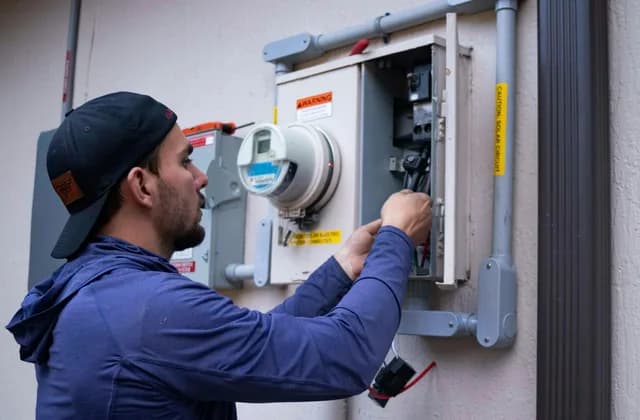
Load shedding turned solar panels, inverters and batteries from a niche upgrade into something many South African households and small businesses have bought or are thinking about. The rush also brought in installers of very different quality. Choosing a solar installer well comes down to a few things that are easy to check before you pay a deposit: what system you actually need, who will sign the electrical Certificate of Compliance (CoC), whether the municipality or Eskom will approve the connection, and what the written quote and warranties really cover.
This guide walks through those checks in order, then the red flags, and when a free Hirovo post can help you find people nearby.
Start with the system you need, not the one on special
“Solar” covers several different set-ups. Knowing which one you want makes quotes comparable.
| Set-up | What it does | Grid approval? |
|---|---|---|
| Backup inverter and battery (no panels) | Charges from the grid and runs chosen circuits during load shedding. | Usually not for feeding power back, but the wiring still needs a CoC; ask your supplier. |
| Hybrid system (panels, inverter, battery) | Uses solar during the day, stores some, and draws on the grid when needed. | Generally yes, because it is connected to the grid. |
| Grid-tied system (panels and inverter, no battery) | Reduces daytime grid use; no backup during load shedding on its own. | Yes. |
| Off-grid system | Runs entirely separately from the supply, common on farms and remote sites. | Not connected to the grid, but the installation still needs to be safe and certified. |
A good installer will ask what you want to keep running and for how long, look at your electricity bills, ask about your geyser, pool pump and stove, and look at the roof before proposing anything. If the first question is “which package do you want?”, you are talking to a salesperson, not a designer.
Registration and the CoC: who signs off the installation
A solar, inverter or battery installation is electrical work on your property. Under the Electrical Installation Regulations, 2009, it must be done by or under the control of a registered electrical contractor, and a registered person must issue the CoC: an electrical tester for single phase, an installation electrician or a master installation electrician, depending on the installation. Three-phase properties need an installation electrician or above.
- Ask who will sign the CoC, their registration category and number, and the contractor they work for.
- Check that the names match the quote and the invoice.
- Ask for the CoC and test report at handover, and keep them with your house papers.
The wiring code, SANS 10142-1, has requirements that apply to embedded generation, including how the inverter is connected, earthing, isolation and labelling. You do not need to know them, but the installer should talk about them confidently. For the wider checks on electricians, see how to hire an electrician in South Africa.
Solar-specific training
Electrical registration shows the person may certify electrical work; it does not prove they know PV design, DC wiring or battery safety. Ask about solar-specific training. The PV GreenCard is an industry programme that trains and assesses installers and uses a standard installation record for customers; it is voluntary and does not replace the CoC, but it is a useful sign. References from recent, similar installations near you are worth even more.
Municipal or Eskom approval: SSEG registration
If your system can run in parallel with the grid or feed power into it, your electricity supplier generally has to approve it before it is connected. In most cities the supplier is the municipality; in some areas it is Eskom. The process is usually called small-scale embedded generation (SSEG) registration or application.
- Requirements differ by municipality. Common ones include an application form, a single-line diagram, proof that the inverter is on the supplier’s approved list, the CoC and, for some systems, a sign-off by a registered engineering professional.
- Some suppliers limit or do not allow export, or require a specific meter if you want to feed power back or be credited for it.
- Unregistered systems can cause trouble: some municipalities charge penalties or require disconnection, and an insurer may ask awkward questions after a claim.
- Sectional title and estates often need body corporate or HOA approval for panels on the roof, and some municipalities may want building plan approval for certain installations. Ask before the installer drills.
Ask your municipality or Eskom for its current SSEG process before you sign a quote, and make sure the quote says who submits the application and whether the fee is included.
Post a free job on Hirovo: what you want, your area and when. People nearby who do solar and electrical work can apply or message you, and you choose who to invite for a quote.
Post a free job →What a proper solar quote includes
Two quotes for “a 5 kW system” can describe very different installations. Ask for an itemised written quote that lists:
- Panels: make, model, number and total capacity.
- Inverter: make, model, size, and whether it is on your supplier’s approved list.
- Batteries: type, usable capacity, and where they will be installed.
- Mounting for your roof type, and how the roof will be sealed where it is penetrated.
- Protection and cabling: DC and AC isolators, surge protection, changeover, and which circuits the backup will run.
- Labour, testing, the CoC and the SSEG application, and who pays the municipal fees.
- Commissioning and handover: showing you how to use the monitoring and what to do if it trips.
- Payment stages, the start date and how long the price is valid.
Batteries and inverters: where they go matters
The inverter and battery are the parts most likely to cause trouble if they are badly placed. Lithium batteries store a great deal of energy, and inverters produce heat. A careful installer talks you through the location before quoting rather than putting everything wherever there is wall space.
- Ventilation and heat: a hot, closed cupboard or a sunny outside wall shortens battery life and can trip the inverter. Ask about the manufacturer’s temperature and clearance requirements.
- Away from sleeping areas and escape routes: many installers prefer a garage or utility room, on a non-combustible wall.
- Protection: correctly rated fuses or breakers between battery and inverter, and a clear way to isolate the system in an emergency.
- Labelling: the DB board and the main switch should show that there is a second source of supply, so that the next electrician or a firefighter knows.
- Which circuits run on backup: agree the list in writing. Geysers, stoves and pool pumps can drain a battery quickly if they are left on the backed-up side.
Ask how the system behaves when the grid returns after load shedding, whether it can be monitored on your phone, and what alerts you will get if something goes wrong. A good handover includes a short, plain explanation of the display and a number to call.
Warranties and your rights
A solar installation usually carries several separate warranties: the manufacturers’ product warranties on panels, inverter and batteries, sometimes a performance warranty on the panels, and the installer’s own workmanship warranty. Ask for each in writing and ask who you call if the inverter fails: the installer, or the manufacturer’s local agent. A long product warranty is worth little if the installer who would have to remove and return the part has disappeared.
The Consumer Protection Act also protects you: services must be done in a proper and timely manner and to a reasonable quality, and installed goods carry an implied warranty of quality. Raise problems in writing first. If that fails, the provincial consumer protection office or the National Consumer Commission can advise you. Tell your home insurer about the installation too; some ask for the CoC.
Red flags when choosing a solar installer
- “You don’t need to register it” or “we’ll connect now and sort out the municipality later”.
- No clear answer to who signs the CoC.
- A system size proposed without looking at your bills, roof or loads.
- Only a package name and a total price, with no makes, models or breakdown.
- A very large deposit with no delivery date, or a price that “expires today”.
- Batteries planned for a cramped, hot or unventilated spot, or next to where people sleep, without discussion.
- No physical address, no references from recent installations, or a company name that keeps changing.
Using a Hirovo post to find solar installers nearby
A Hirovo post is free and lets people nearby who do solar or electrical work see your job, apply or message you. It suits getting a few local quotes, a check of an existing system, cleaning panels, or small follow-up work. Describe what you want, give your suburb rather than your street address, and add photos of your DB board and roof if you can.
Be clear about the limits. Hirovo is new in South Africa, so replies may be few at first. It does not vet installers or check electrical registration, solar training, insurance or company details, and it is not an installer or an agency; every check in this guide is yours. For help writing the post, see how to write a job post.
Before you pay a deposit: the system type agreed in writing · who signs the CoC, with registration category and contractor name · the SSEG application and fees included, with your supplier’s process checked · makes and models of panels, inverter and batteries on the quote · product and workmanship warranties in writing · body corporate or HOA approval, if you need it · payment in stages.
In short
Decide what you want the system to do, then choose an installer who asks about your loads and roof before quoting. Make sure a registered person under a registered electrical contractor will issue the CoC, that the installer handles your municipality’s or Eskom’s SSEG approval, and that the quote lists every component, the warranties and the payment stages. Walk away from anyone who says registration is not needed.