
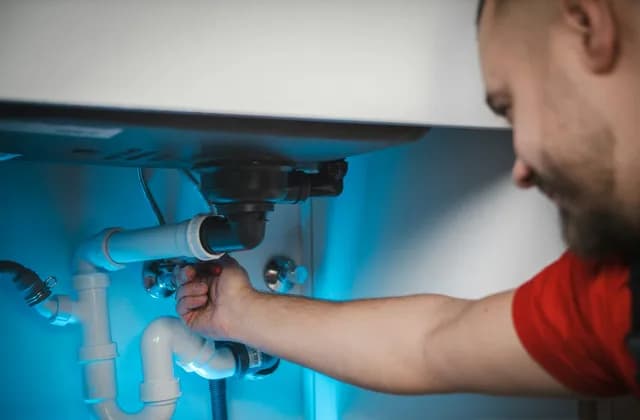
Most people look for a plumber in a hurry: water coming through the ceiling from a burst geyser, a drain backing up on a Saturday, a toilet that will not stop running and a water bill that keeps climbing. That is exactly when it is easiest to hire the wrong person. Knowing how to hire a plumber in South Africa comes down to a few checks: whether the plumber is trained and registered, whether the job needs a Certificate of Compliance, what the quote covers, and which signs mean you should walk away.
This guide is for homeowners, tenants and small businesses in Johannesburg, Pretoria/Tshwane, Cape Town, Durban, Gqeberha and anywhere else in the country. It starts with sizing the job, then registration and certificates, burst geysers and insurance, price, red flags, and when a small job can go through a Hirovo post.
Size the plumbing job first
A dripping tap washer and a geyser replacement are both plumbing, but they need very different people and paperwork.
| Job | Paperwork to expect | Who to hire |
|---|---|---|
| Dripping tap, running toilet cistern, replacing a tap or shower head | Usually none beyond an invoice. | A competent plumber or handyman; a small local hire suits it. |
| Blocked sink or drain inside the house | Invoice; ask what caused it. | A plumber with drain-clearing equipment. |
| Leak inside a wall or under the floor, high water bill | Invoice; a written report helps for the municipality or insurer. | A plumber who does leak detection. |
| Replacing or installing a geyser | Plumbing Certificate of Compliance; electrical CoC if the electrical side changes. | A PIRB-registered plumber in a category that can issue the CoC. |
| Solar water heater or heat pump | Plumbing CoC; electrical work done by an electrician. | A registered plumber experienced with the system. |
| Gas water heater or gas hob | Gas Certificate of Conformity. | A gas practitioner registered with SAQCC Gas. |
| New bathroom, moving drains, alterations | May need approved building plans from the municipality. | A registered plumber, often with a builder, on a written quote. |
| Sewer or main supply outside the house | Depends on whether it is your pipe or the municipality’s. | Call the municipality first to find out whose side it is. |
Checking a plumber in South Africa: PIRB registration and the trade test
The Plumbing Industry Registration Board (PIRB) registers plumbers in categories that reflect their training, from learners up to licensed and master plumbers. Ask for the registration number and category, and check it yourself on PIRB’s register. Make sure the name matches the person who will do your job, not only the company owner.
A qualified plumber has passed the national trade test, which is what the industry calls a “Red Seal” artisan. You can ask to see the trade test certificate. Many good plumbers’ assistants and handymen do small jobs well, and there is nothing wrong with hiring one for a washer or a tap. The line to hold is this: anything involving the geyser, the drainage system or alterations needs a registered plumber.
For a business rather than an individual, also ask how long they have been operating, where they are based, and whether they have public liability insurance in case something goes wrong in your home. For a larger job, ask for the details of a recent customer and call them.
The plumbing Certificate of Compliance and geyser work
Installing or replacing a fixed electric geyser in South Africa must comply with SANS 10254. That covers the parts you do not see day to day: the pressure control valve, the safety valve and a discharge pipe that goes outside, vacuum breakers, and a drip tray with its own drain so that a leak does not come through the ceiling. A registered plumber in the right category issues a plumbing Certificate of Compliance (CoC) once the installation is done.
Ask for the CoC in the quote. You will need it:
- For your insurer: many insurers ask for it before they settle a geyser claim, and some require the replacement to meet the standard.
- When you sell: some municipalities, notably the City of Cape Town, require a plumbing certificate on transfer of a property. Your conveyancer will tell you what applies.
- For your own records: it shows the installation was done properly and by whom.
The electrical connection to the geyser is electrical work. If it changes, an electrician may need to issue an electrical CoC. See how to hire an electrician in South Africa for how that side works.
A burst geyser: what to do and how insurance works
The first ten minutes
- Switch off the geyser at the electrical distribution board.
- Turn off the water, at the geyser’s isolating valve if you can reach it safely, or at the main stopcock.
- Open a hot water tap to release pressure.
- Move furniture and electronics out of the way and take photos of the damage.
Call the insurer before the plumber
Home insurance in South Africa often covers a burst geyser and the resulting water damage, but insurers usually have their own claims process and sometimes their own approved plumbers. Call them first and ask how they want it handled; booking a plumber of your own without asking can complicate the claim. If you rent, tell the landlord or agent at once, in writing. Most leases make the geyser the landlord’s responsibility.
If you are replacing an old geyser anyway, ask about options: a correctly sized unit, a timer, a geyser blanket and insulated pipes, or solar water heating or a heat pump. They affect your electricity bill for years.
Post a free job on Hirovo: what is leaking or blocked, the area and when. People nearby who do plumbing work can apply or message you, and you decide who to hire.
Post a free job →Hidden leaks and a high water bill
A water bill that suddenly jumps is often the first sign of a leak you cannot see: a pipe under the slab, a leaking cistern, a garden irrigation line or a pipe between the meter and the house. Before you call anyone, do a simple test. Close every tap in the house, make sure nothing is running (washing machine, irrigation, pool top-up), and look at the water meter. If the dial still moves, water is escaping somewhere.
Then narrow it down. Put a few drops of food colouring in a toilet cistern and wait: if colour appears in the bowl without flushing, the cistern is leaking. Look for damp patches on walls and floors, green patches in the garden in dry weather, or a warm spot on a tiled floor, which can mean a hot water pipe is leaking underneath.
A plumber with leak detection equipment can find a hidden leak without breaking open whole walls. Ask for a short written report of what was found and repaired: many municipalities have a process for adjusting a bill after a proven leak on the property, and the report is what they will ask for. Check your municipality’s rules and deadlines, because they differ between metros. If the leak is on the municipal side of the meter, or in the street, report it to the municipality instead of paying a plumber for it.
What sets the price of plumbing work
A figure you read online is somebody else’s job. What you pay depends on:
- Call-out fee and travel, and whether the first half hour or hour is included.
- Time of day: after-hours, weekend and public holiday call-outs cost more.
- Parts: taps, valves, pipe and fittings, or a whole geyser, and whether you or the plumber supplies them.
- Access: geysers in the roof space, pipes inside walls, and making good tiles or plaster afterwards.
- Equipment: drain machines, cameras or leak detection gear.
- Certification: the CoC and the plumber’s time to complete it.
For anything beyond a small repair, ask for a written quote from more than one plumber and compare them line by line. For repairs, the Consumer Protection Act 68 of 2008 generally entitles you to an estimate before work starts, and the plumber should not charge more than you approved without your consent. The Act also gives you rights if the work is poor: it must be done properly, and repairs and parts carry an implied warranty for a limited period.
Written quotes and red flags when you hire a plumber
A proper quote lists labour, parts, the call-out fee, making good, the CoC where needed, the start date, how long the job will take and when payment is due. Walk away from these signs:
- Cash only, no invoice, no business details.
- No registration number for geyser or drainage work, or a number in someone else’s name.
- “You don’t need a CoC” for a geyser replacement.
- A large deposit up front before any parts are bought or work starts.
- Pressure to decide now, or a diagnosis that keeps growing once they are in the roof.
- An unsolicited visit from someone claiming to be from the municipality or insurer who wants to “inspect the geyser”. Check with the municipality or your insurer first.
If something goes wrong, raise it in writing first. You can complain to PIRB about a registered plumber, and for consumer disputes approach the National Consumer Commission or a consumer ombud.
How to hire a plumber for small jobs with a Hirovo post
Hirovo is new in South Africa, and posting a job is free. Describe the problem, add a photo of the tap, cistern or leak, give the area rather than your street address, and say when you need it done. People nearby who do plumbing work can see the post, apply or message you in the app. You read the replies and decide.
Be clear about what that is. Hirovo does not vet applicants or check trade tests, PIRB registration or insurance; it is not a plumbing company or an agency, and the checks in this guide are yours to make. That makes a post a good fit for small household jobs: a dripping tap, a running cistern, a new shower head, a blocked sink. For a geyser, drainage or alterations, hire a PIRB-registered plumber on a written quote and make sure you get the CoC. Share your address by message once you have chosen someone. For wording, see how to write a job post.
Before the plumber starts, check:
- PIRB registration number and category, looked up yourself;
- A written quote with call-out fee, parts, labour and making good;
- Whether a Certificate of Compliance is needed, and that it is in the quote;
- For a burst geyser, that your insurer or landlord has been told first;
- No large deposit before work or parts;
- Your street address shared only with the plumber you chose.
In short
Size the job first. Small repairs can be a quick local hire, but geysers, drainage and alterations need a PIRB-registered plumber, a written quote and, for a geyser, a Certificate of Compliance under SANS 10254. When a geyser bursts, switch off, turn off the water and call your insurer or landlord before a plumber. Check the registration yourself, get prices in writing, and walk away from anyone who says the paperwork is not needed.