
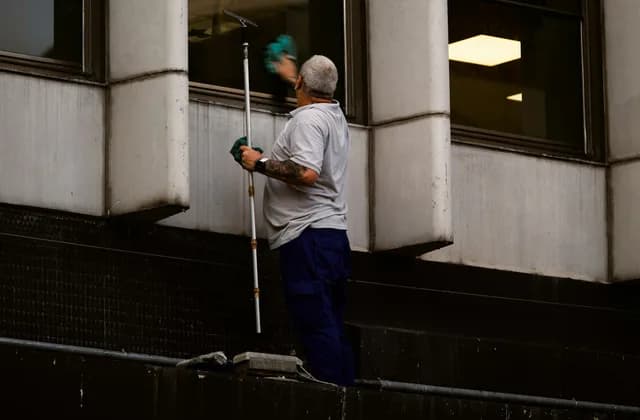
Window cleaning cost is usually the first thing people want to know, and the quotes can look very far apart. One company gives a single figure on the phone, another wants to know how many windows you have, and a third asks about the conservatory. The difference is rarely just the person doing the job. It is usually access, what is included, and how often they come.
This guide is for homeowners and renters in the United States and the United Kingdom. It explains what sets the price, the difference between water-fed poles and ladders, safety on upper floors, what a written quote should list, and how to hire a window cleaner you can trust. Where the rules differ between the two countries, there are separate notes.
Window cleaning cost: what sets the price
A per-window figure you find online cannot price your home. Two houses with the same number of windows can be very different jobs. These are the items that move the number:
- Number and size of windows: small panes, large picture windows, sliding doors and glass doors are not the same amount of work.
- Storeys and access: ground-floor windows are quick; upper floors, steep ground, extensions, flat roofs and overgrown gardens take longer and need more equipment.
- Inside, outside or both: inside work means moving furniture, protecting floors and working around blinds and curtains.
- Frames and sills: some quotes cover the glass only; others include frames, sills and doors.
- Screens and tracks: common in US homes; removing, washing and refitting screens and clearing sliding-door tracks adds time.
- How dirty the glass is: a first clean after a long gap, building work, paint splashes and hard-water spots take far longer than a maintenance clean.
- Conservatories and skylights: roof glass needs different equipment and more care.
- Frequency: a regular round is usually priced differently from a one-off visit, because repeat cleans are faster.
| Type of job | What it usually involves | What raises the price |
|---|---|---|
| Regular outside clean | Glass, often frames and sills, on a set cycle. | Upper floors, hard access, missed visits that let dirt build up. |
| One-off or first clean | Heavier soiling and a deeper clean of frames. | A long gap since the last clean, moss, sap, bird droppings. |
| Inside and outside | Both faces of the glass and inside sills. | Furniture, blinds, fragile items, number of rooms. |
| Screens and tracks | Removing, washing and refitting screens; clearing tracks. | Number of screens, stuck or damaged screens. |
| After building work | Paint, plaster, cement and sticker residue. | Careful scraping, risk to the glass, extra time. |
| Conservatory or skylight | Roof panels and roof glass. | Height, roof access, need for longer poles. |
Hard-water spots and building dust
Hard-water spots are mineral marks left by sprinklers, hard tap water or rain running off concrete. Fresh spots often come off; old ones can etch the glass so that no cleaning removes them. Building dust and paint splashes need a blade or special products, and a careless scrape can scratch the glass. Ask how they plan to handle these before they start, and whether they will test a small area first.
Water-fed poles or ladder and squeegee
There are two main ways to clean the windows of a house, and many window cleaners use both.
A water-fed pole system pushes purified water through a long pole to a brush. The window cleaner stays on the ground, scrubs the glass and frames, and rinses with pure water, which dries without leaving marks. It is often used for upper floors and for frames that need scrubbing. It can reach glass a ladder cannot reach safely, such as windows above an extension, and it keeps the cleaner off ladders.
Traditional cleaning uses a squeegee, a cleaning solution and, for high windows, a ladder. It gives a sharp finish on glass and is the normal way to clean inside windows. Outside on upper floors, it means working at height.
Neither method is a mark of quality on its own. Ask which method they will use on each part of your house, and why. If you have a conservatory roof, skylights or windows above a lean-to, ask how they reach them without standing on the roof.
Upper floors and window cleaning cost: access and safety
Upper-floor and hard-to-reach windows are where accidents happen. This is one reason they cost more: the job needs more time, more equipment and a plan. It is also why you should never cut corners on them.
Do not ask anyone, including yourself, to lean out of an upper window or to use a ladder that is too short, on soft ground or without safe footing. If a window cleaner arrives with a plan that looks unsafe, it is fine to stop the job.
UK: work at height is covered by the Work at Height Regulations 2005. A professional window cleaner should plan ladder work properly or use a water-fed pole from the ground. Ask how they will reach your upper windows, and ask for proof of public liability insurance in case a ladder slips into a window, a car or a conservatory roof.
US: ask for proof of liability insurance, and workers’ compensation if they have employees. Without it, an injury on your property can become your problem. Licensing rules vary by state and city, so check with your local authority whether a business licence is needed where you live.
Before the first visit: clear access to the house, park cars away from the walls, move fragile pots and garden furniture, and tell the cleaner about anything that could break, such as cracked panes, loose frames, old putty or a conservatory roof that is not safe to lean on.
Posting a job on Hirovo is free. Say how many windows and storeys you have, inside or outside, and any conservatory, skylights or screens. Add a photo of the house if you can. Window cleaners nearby can apply or message you in the app. You compare them and decide.
Post a free job →How to hire a window cleaner: what the written quote should list
A clear quote protects both sides. Ask for it in writing, by message or email, before the first clean. It should say:
- How many windows, and which ones: front, back, sides, upper floors, glass doors.
- Inside, outside or both.
- Whether frames, sills and doors are included.
- Screens and tracks, if you have them.
- Any conservatory roof, skylights or glass roofs.
- The method for each part: water-fed pole, ladder or both.
- Whether it is a regular round or a one-off, and what happens if a visit is missed because of the weather.
- How payment works and when it is due.
- What happens if something is damaged: who pays, and how quickly they will tell you.
Send photos of the front and back of the house and any hard-to-reach glass. That lets a window cleaner quote accurately without guessing, and it makes the price harder to change on the day.
Regular round or one-off clean
Many window cleaners work in rounds, coming back every few weeks or months on a set cycle. The first clean is often harder and may be quoted separately, because it removes months of dirt. After that, maintenance cleans are quicker.
On a regular round, ask whether you need to be at home, how they handle a locked side gate, how they let you know they are coming, and how to pause or cancel. If you only want a one-off clean before a sale, a move or an event, say so up front. If you also want regular cleaning inside the house, read our guide on how to hire a house cleaner.
Questions to ask a window cleaner
- How will you reach my upper windows, and will anyone use a ladder?
- Is this price for outside only, or inside too?
- Are frames, sills, screens and tracks included?
- Can I see proof of your liability insurance?
- In the US: do you have employees, and do you carry workers’ compensation?
- How do you deal with hard-water spots or paint splashes?
- What happens if it rains, or if you cannot reach a window safely?
- What happens if something is broken or damaged?
Using a free Hirovo job post
Posting a job on Hirovo is free. Describe your house, the number of windows and storeys, and what you want cleaned, choose your area, and window cleaners nearby can apply or message you. Hirovo is a global platform and the number of window cleaners registered in the US and UK is still small, so use it alongside other ways of finding local services. Hirovo does not verify the people who reply and is not a party to the work, so run the checks above on anyone who responds.
In short
Window cleaning cost depends on the number and size of your windows, storeys and access, inside or outside, frames, screens and tracks, how dirty the glass is, and how often you book. Get a written quote that lists all of it and says what happens if something is damaged. Ask how upper windows will be reached, check insurance, and never let anyone take risks at height to save time.