
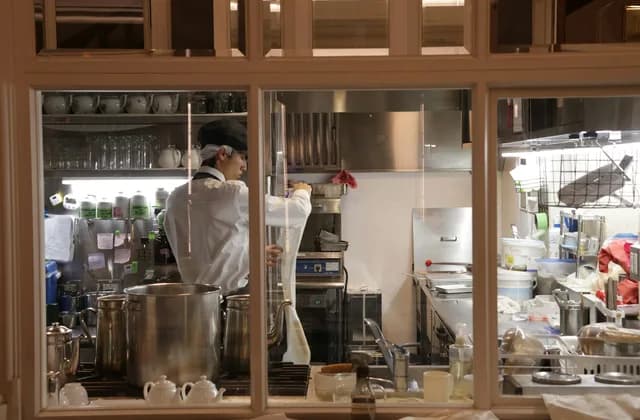
A kitchen advert in South Africa can mean almost anything. “Cook wanted, Durban North” might be a two-person takeaway kitchen. “Chef de partie, Stellenbosch” is probably a wine farm restaurant with a tasting menu and a pastry section. “Cooks for mine site catering, Limpopo” is a contract catering company feeding hundreds of people a day on a rotation. Same trade, three very different jobs, with different hours, different expectations and very different paths up.
This guide is written for cooks and chefs looking for work in South Africa: what each kitchen role actually involves, whether you need a qualification, the food hygiene rules every kitchen works under, what the law says about your hours and pay, and how to get hired.
Kitchen jobs in South Africa: from scullery to head chef
Most kitchens use a version of the classic brigade, even if the titles are loose. Knowing the ladder helps you apply for the right level and ask for the right money.
| Role | What you actually do | What employers usually look for |
|---|---|---|
| Scullery / kitchen porter | Dishes, pots, cleaning the kitchen, receiving deliveries, basic prep | Reliability, speed, willingness; often the entry point with no experience |
| Kitchen assistant / prep cook | Peeling, cutting, portioning, simple recipes, labelling and storage | Knife skills, following instructions, hygiene habits |
| Cook / line cook | Cooking to order on a station during service, keeping the section stocked | Experience on a grill, fryer or pan station; working under pressure |
| Commis chef | Junior on a section under a chef de partie, learning the station | Some training or a learnership, good basics, keen to learn |
| Chef de partie | Runs one section (grill, sauces, cold, pastry) including prep lists and quality | Several years’ experience; a qualification is often asked in hotels |
| Sous chef | Runs the pass, rosters, ordering, stock and food cost; deputises for the head chef | Leadership, costing, menu work, a track record you can prove |
| Head chef / executive chef | Menus, budgets, suppliers, hiring and the whole kitchen’s standards | Management experience, references, often a formal qualification |
Two roles sit slightly outside the ladder but employ many cooks. Contract catering (mines, hospitals, factories, schools, corporate canteens) cooks large volumes to a set menu, often on day shifts with fewer late nights. Lodge and hotel kitchens run breakfast, lunch and dinner for guests, sometimes in remote places where staff live on site.
Do you need a qualification to be a chef in South Africa?
There is no licence to cook, and a restaurant can hire anyone it trusts on the line. In practice, qualifications matter more the higher and the more formal the kitchen. The main routes are:
- QCTO occupational qualifications. The Quality Council for Trades and Occupations oversees occupational certificates for cooks and chefs, delivered through accredited training providers and assessed at the end. Ask any provider for its accreditation before you pay.
- Hospitality learnerships. CATHSSETA, the SETA for culture, arts, tourism, hospitality and sport, funds learnerships where you work in a kitchen and study at the same time. Learners receive an allowance rather than a normal wage; ask what it is in writing.
- Culinary school diplomas. Private and public colleges offer full-time chef courses. They can open doors to hotels and fine dining, but they are expensive, so compare what is included (practical hours, placement, international certificates) before signing.
- Experience you can prove. A head chef who will take your call is often worth more than a certificate. Keep names and numbers of the chefs you worked under.
Matric is not a legal requirement for kitchen work and many kitchens do not ask for it at the lower levels. Hotel groups and contract caterers sometimes list Grade 12 as a minimum for supervisory roles, so read the advert.
Food safety in South African kitchens: R638 and the Certificate of Acceptability
Every food business in South Africa works under the Regulations Governing General Hygiene Requirements for Food Premises (R638 of 2018), made under the Foodstuffs, Cosmetics and Disinfectants Act. Two things in those rules touch you directly.
First, the premises must hold a Certificate of Acceptability, issued by the municipality’s environmental health practitioners after an inspection. A kitchen that cannot show one is operating outside the rules, and that usually tells you something about how the rest of the business is run.
Second, the person in charge of the premises must make sure that food handlers are trained in food hygiene. That is why so many adverts ask for a food safety certificate. If you do not have one, a short course is worth doing, and a good employer will often train you on the job.
Habits a head chef watches for in the first hour
- Washing hands at the right moments: before starting, after raw meat, after the bin, after the bathroom.
- Separate boards and utensils for raw and cooked food, and keeping raw meat below ready-to-eat food in the fridge.
- Labelling and dating everything you put away, and first in, first out.
- Hot food hot and cold food cold: knowing that food left out at room temperature is how people get sick.
- Allergens: knowing which dishes contain nuts, gluten, dairy, shellfish or egg, and never guessing when a waiter asks.
- Clean uniform, hair covered, no jewellery on the hands, and staying home if you have a stomach bug.
Create a free Hirovo profile, add cooking to your trades and set the area you can travel to. When a restaurant, lodge or caterer near you posts a kitchen job, you can message them directly.
Create a free profile →Where the kitchen jobs are: restaurants, hotels, lodges and catering
Kitchen work follows people and tourists, so it clusters in a few places and moves with the seasons.
- Cape Town and the Winelands. Restaurants, wine farm kitchens and hotels. Summer, roughly December to March, is the busy season and many places hire extra cooks for it; winter can be quieter, with shorter hours.
- Johannesburg and Pretoria. Restaurants, hotels, conference venues, corporate canteens and contract catering, busier all year and less seasonal.
- Durban and the KwaZulu-Natal coast. Hotels and resorts are busy in the December holidays and the July school holidays, when inland families head to the coast.
- Garden Route and Eastern Cape. Holiday towns with strong December peaks and quieter winters.
- Game lodges. Private reserves in Limpopo, Mpumalanga, the North West and the Eastern Cape hire cooks who live on site, often on a rotation of several weeks on and a shorter break off. Ask exactly how accommodation, meals and transport to the lodge are handled.
- Contract catering. Mines, hospitals, factories and schools. Hours are more regular and volumes are big; it suits cooks who want fewer late nights.
Hours, Sundays, public holidays and pay: what the law says
Kitchens work when everyone else eats, so weekends, public holidays and late nights come with the trade. The Basic Conditions of Employment Act 75 of 1997 (BCEA) sets the floor. Most of the hours rules apply to employees who earn below the BCEA earnings threshold, which is updated from time to time; most cooks are below it, many senior chefs are not.
| Situation | What the BCEA says (below the earnings threshold) |
|---|---|
| Ordinary hours | Up to 45 hours a week: 9 hours a day if you work five days, 8 hours a day if you work more than five days. |
| Overtime | Only by agreement, paid at least one and a half times your rate, and no more than 3 hours a day or 10 hours a week. |
| Meal break | After 5 hours of continuous work, at least one hour, which can be reduced to 30 minutes by written agreement. |
| Sunday work | Double pay if you do not ordinarily work Sundays; at least one and a half times if you do. |
| Public holidays | Work only by agreement, paid at least double. |
| Night work (18:00–06:00) | Needs your agreement, an allowance or shorter hours, and transport must be available to get you home. |
| Annual leave | 21 consecutive days a year, which works out to 15 working days on a five-day week. |
Pay. Your basic wage must be at least the national minimum wage under the National Minimum Wage Act 9 of 2018. The amount is reviewed every year and usually changes from 1 March, so check the current figure with the Department of Employment and Labour. Tips do not count towards it: a share of the tip pool is extra, not a replacement for your wage. Above the minimum, kitchen pay depends on the level, the type of kitchen and the city, and there is no single going rate.
UIF. Your employer must register you for the Unemployment Insurance Fund and deduct 1% of your pay, adding another 1% of its own. Your payslip should show it. If a kitchen has been deducting UIF but you cannot find yourself on the system, raise it early; it matters when a restaurant closes for winter or for good.
Before you accept a kitchen job, check:
- A written contract or letter with your title, basic pay, hours and days off.
- How Sundays, public holidays and overtime are paid, in writing.
- That you will get a payslip and be registered for UIF.
- How you get home after a late close, and whether transport is provided.
- Whether staff meals are included and whether anything is deducted for them.
- For lodges: accommodation, rotation, travel to site and any deductions.
- That nobody is asking you for money: no fee for the job, the uniform or the training.
How to apply for chef and cook jobs
A head chef reads a kitchen CV in about ten seconds, between deliveries. Make those seconds count. Our guide on writing a CV in South Africa covers the general layout; for a kitchen, put these near the top:
- Stations you can run (grill, pan, fryer, pizza, pastry, cold kitchen, breakfast) and the type of kitchen (à la carte, buffet, banqueting, canteen).
- Volume: “breakfast for 180 covers”, “Friday dinner service of 120 plates”. Numbers tell a chef more than adjectives.
- Qualifications and food safety training, with dates.
- Where you live and how you travel. Late closes and early prep mean transport matters to a kitchen.
- Two references: chefs or kitchen managers you worked under, with phone numbers.
The trial shift. Many kitchens will ask you to work a few hours so they can see you on the line. Treat it as the real interview: arrive early with your own knife roll if you have one, ask where things are once and remember, keep your station clean, and ask before you taste or plate. Agree how long it is beforehand. A short trial is normal; days of unpaid full shifts are not.
Growing. The fastest way up is usually to move sections: a cook who can cover grill, cold and pastry is the one who gets made chef de partie. Ask your chef to let you learn food costing and ordering; that is the step between cook and sous chef.
Finding cook and chef work on Hirovo
Hirovo is a free jobs and local services marketplace. It is new in South Africa, so there are not many South African kitchen listings yet, and we would rather tell you that than pretend otherwise. What you can do now:
- Create a free profile, add cooking or chef work as your trade, and set the area you can realistically travel to.
- Describe your stations, volumes and experience in plain words, the same way you would on a CV.
- When a restaurant, lodge, caterer or household posts a kitchen job near you, message them directly in the app.
Hirovo does not vet employers or check anyone’s qualifications, and it never charges you to apply. Do your own checks: visit the kitchen, ask for the contract, and walk away from anyone who asks you for money.
In short
Kitchen work in South Africa runs from scullery to executive chef, and you can start at the bottom with no certificate. Qualifications, a QCTO certificate, a learnership or a diploma, matter more in hotels, lodges and fine dining, and a food safety course helps almost everywhere because R638 requires food handlers to be trained.
Know the floor the BCEA gives you on hours, Sundays, public holidays and night work, check that your basic pay meets the current national minimum wage without counting tips, and make sure you are registered for UIF. Then sell yourself with stations, volumes and references, and treat the trial shift as the real interview.