
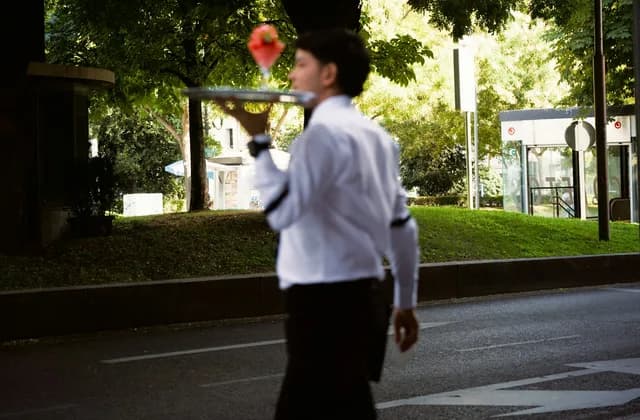
Waitering is one of the most common first jobs in South Africa, and for many people it becomes a trade in its own right: head waiter at a wine farm, sommelier, restaurant manager. It is also one of the jobs where workers are most often underpaid, because of one widespread idea: that waiters earn from tips, so the basic wage does not really matter.
This guide is for anyone looking for waiter or waitress work in South Africa. It explains what the job involves in different kinds of restaurants, where the work is and when, what the law says about your basic pay, tips and deductions, and how to get hired, with or without experience.
What waiter jobs in South Africa actually involve
The job title is the same but the day is very different depending on where you work.
- Casual and family restaurants. Big sections, fast turns, lots of families and groups. Speed, memory and a good attitude matter most. This is where most people start.
- Fine dining and wine farm restaurants. Fewer tables, longer menus, wine pairings, and a lot of product knowledge. In the Western Cape, being able to talk about local wine is a real advantage.
- Hotels and lodges. Breakfast buffets, room service, conferences and dinner service, often with split shifts. Lodges may have you live on site.
- Events and functions. Weddings, year-end functions and conferences, often on a casual or per-event basis. Plated service for hundreds of guests at once.
- Coffee shops and bistros. Daytime hours, earlier finishes, and often combining waitering with the till or making coffee.
The skills that get you promoted
- Knowing the menu well enough to answer allergy and ingredient questions honestly, and checking with the kitchen when you are not sure.
- Carrying three plates, reading a table, and timing courses with the kitchen.
- Using the point-of-sale system accurately: most cash-up problems start with orders captured wrongly.
- Wine and drinks knowledge, and serving alcohol responsibly: the Liquor Act prohibits selling alcohol to anyone under 18, so ask for ID when a guest looks young.
- Languages. In tourist areas, a waiter who can greet guests in German, French or Portuguese as well as English and a local language stands out.
Where waiter jobs are, and when
Restaurant work follows tourists and holidays, so it helps to apply before the rush, not during it.
- Cape Town, the Winelands and the Garden Route. The peak is summer, roughly December to March. Many restaurants hire from October and November, and cut hours in the quieter winter months.
- Durban and the KwaZulu-Natal coast. Busy in the December holidays and again in the July school holidays.
- Johannesburg and Pretoria. Less seasonal, with strong demand in business districts, shopping centres and function venues all year; December can be quieter as people leave for the coast.
- Events. The year-end function season, from late October to mid-December, is when casual waiters are most in demand.
Create a free Hirovo profile, add waitering to your skills and set the area you can get to. When a restaurant, hotel or event near you posts a job, you can message them directly.
Create a free profile →Basic pay and tips: tips are not your wage
If you are employed as a waiter, you are entitled to a basic wage of at least the national minimum wage, set under the National Minimum Wage Act 9 of 2018, for every hour you work. The amount is reviewed every year and usually changes from 1 March, so check the current figure with the Department of Employment and Labour rather than trusting what someone tells you at the interview.
Crucially, the Act excludes tips and other gratuities from the pay used to measure the minimum. Your employer cannot say “you made enough in tips, so we don’t need to pay you”. Tips are yours on top of your wage.
You will still meet offers that say “tips only”, “commission-based” or “you’re self-employed, you just rent a section”. Calling you self-employed does not change the law if in practice the restaurant sets your hours, gives you a uniform and tells you how to work. If you want to understand how the law decides whether you are an employee, read our guide to employee rights in South Africa.
What can legally come off a waiter’s pay
Restaurants sometimes deduct for breakages, for tables that walk out without paying, for card machine fees on tips, or for a “table fee” to work a shift. The Basic Conditions of Employment Act (BCEA) only allows an employer to deduct from your pay if the law requires it (such as tax and UIF), or if you have agreed to it in writing. For loss or damage there are extra conditions.
| What you are told | What to ask | Where the law stands |
|---|---|---|
| “You pay for breakages.” | Is it written in my contract? How is fault decided? | A deduction for loss or damage needs your fault, a fair procedure, your written agreement and must not exceed a quarter of your net pay. |
| “If a table walks out, the bill comes off your wages.” | What is the procedure? Do I get to explain? | The same loss-or-damage conditions apply. A blanket rule applied without a hearing does not meet them. |
| “There’s a fee to work a shift.” | What exactly is the money for? | Paying your employer to be allowed to work is a serious warning sign. Get advice before agreeing. |
| “Card tips are paid out at month-end, minus fees.” | How much is deducted, and when is it paid? | The arrangement should be clear and written down. Ask for it before you start. |
| “Tips are pooled.” | Who shares, and on what formula? | Tip sharing with the kitchen and bar is common. The formula should be known to everyone. |
| “UIF comes off your pay.” | Am I actually registered? | Correct: 1% from you and 1% from the employer. Check your payslip and your registration. |
Shifts, split shifts, Sundays and late closes
Waiters work when other people are off. If you earn below the BCEA earnings threshold, which is updated from time to time and covers most waiters, the Act gives you:
- Ordinary hours of up to 45 a week, with overtime only by agreement and paid at least one and a half times your rate.
- Sunday pay of double your rate if you do not ordinarily work Sundays, or at least one and a half times if Sunday is a normal working day for you, which it usually is in restaurants.
- Public holidays worked only by agreement, and paid at least double.
- A meal break after five hours of continuous work.
- Night work rules for regular work after 18:00: your agreement, an allowance or reduced hours, and transport available to get you home.
Split shifts (lunch, a gap in the afternoon, then dinner) are common. Ask how the gap is counted and whether you can realistically go home in between. Casual and event work can suit you if you study or have another job, but ask whether you are an employee and whether UIF is being paid. Note that people who work fewer than 24 hours a month for an employer are excluded from most BCEA provisions.
Before your first shift, get clear answers on:
- Your basic hourly or monthly wage, in writing, separate from tips.
- How cash tips, card tips and service charges are paid and shared.
- Whether anything is deducted for breakages, walk-outs, uniforms or card fees, and on what terms.
- Your shifts, how Sundays and public holidays are paid, and your days off.
- How you get home after a late close.
- That you will get a payslip and be registered for UIF.
- That nobody is charging you a fee to get or keep the job.
How to get hired as a waiter, with or without experience
Walking in still works. Go between 14:00 and 16:00, when lunch is over and dinner has not started, ask for the manager and hand over a one-page CV. Never walk in during a rush.
Keep the CV short. Our guide on writing a CV in South Africa covers the basics. For waitering, put near the top: the kind of places you have worked, how many tables you handled, whether you know the point-of-sale system, wine or barista skills, languages, which shifts you can work, and how you travel.
No experience? Say so honestly and offer to start as a runner or on quieter shifts. Customer-facing work in a shop, a church, a sports club or at school events counts; mention it. Hospitality learnerships funded by CATHSSETA combine work and training and are worth asking about.
The trial shift. Many restaurants will ask you to work part of a service. Arrive early and presentable, learn the table numbers, carry what you are given, smile, and ask when you do not know. Agree beforehand how long the trial is. A few hours is normal; unpaid full shifts for days are not.
Interested in the other side of the pass? Our guide to chef and cook jobs in South Africa explains the kitchen ladder.
Finding waiter work on Hirovo
Hirovo is a free jobs and local services marketplace. It is new in South Africa, so South African restaurant listings are still few, and we would rather be honest about that. What you can do now:
- Create a free profile, add waitering (and barista or bar work if you have it) to your skills, and set your area.
- Write a short, honest description: where you have worked, which shifts you can do, languages.
- When a restaurant, hotel or event organiser near you posts a job, message them directly.
Hirovo does not check employers, and it never charges you to apply. Ask for the contract, meet in person at the restaurant, and walk away from anyone who asks you to pay for a job.
In short
Waitering is a real job with real rights. If you are employed, your basic wage must meet the national minimum wage on its own, because tips do not count towards it. Deductions for breakages or walk-outs are only lawful with your written agreement, a fair procedure and a cap of a quarter of your net pay.
Know how Sundays, public holidays and late nights are paid, ask how tips are shared before you start, and make sure you are registered for UIF. Then apply before the season starts, walk in at the quiet time of the afternoon, and treat the trial shift as the interview.