
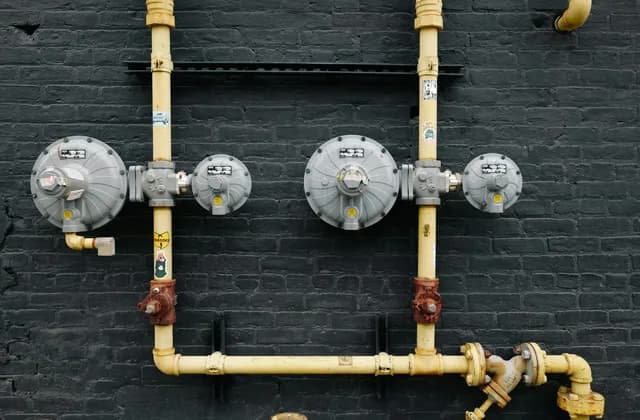
Gas line installation comes up when you want a gas stove, a dryer or a pool heater, or when a pipe has to move during a renovation. It can look like a small job, because the pipe is small. A mistake can mean a gas leak in your home, so this work belongs with a qualified person.
This guide treats the US and the UK separately, because the rules differ. It starts with what to do if you smell gas. Then it covers who can do the work, how to check them, how the job runs up to gas-on, what renters and flat owners must sort out, and what sets the cost. It does not cover servicing heating appliances. For that, read our guide to boiler service and furnace tune-ups.
First, safety: if you smell gas
A gas smell comes before everything else in this guide. Do not finish what you are doing and do not wait for a call back from an installer.
If you smell gas: get everyone out of the building. Do not touch light switches, appliances or anything else that could make a spark. Do not look for the leak or try to fix it. In the UK, if you can do it on your way out, open doors and windows and turn off the gas at the emergency control valve near the meter, unless the meter is in a basement or cellar. Once you are outside, call for help. In the US, call 911 or your gas utility. In the UK, call the National Gas Emergency Service on 0800 111 999. Do not go back in until the emergency service tells you it is safe.
The same steps apply during a job and after it. A new line that has been tested and signed off still gets the same response if you smell gas later.
Why gas line installation is not a DIY job
Pipe, fittings and kits are on sale in shops and online. That does not make the work safe to do yourself. A leak can start at any joint and you cannot judge a joint by looking at it. The line has to be tested by someone trained to do it, with the right equipment.
So leave all of it to the installer: adding a branch for a stove, moving a connector, extending a pipe, disconnecting an appliance to save on a visit. In the UK, the law settles this question. In the US, the rules depend on where you live, and your building department can tell you what applies. The safe answer for your household is the same in both countries: hire a qualified person.
US: who can install a gas line
Licensing varies by state and city. The person doing the work may be a licensed plumber or a licensed gas fitter, depending on local rules. Ask your local building department which licence applies to your job. Then ask the installer for their licence number and check it with the body that issued it. Ask for proof of insurance as well. A verbal yes is not a check. For general advice on vetting a tradesperson, see our guide on how to hire a plumber.
Permit and inspection
A permit and inspection usually come from the local building department. Ask one direct question early on: who pulls the permit? Get the answer in the quote. If someone tells you no permit is needed, check with the department yourself before work starts. Also ask when the inspection happens, so no pipe is closed behind a wall before the inspector has seen what they need to see.
Pressure test, CSST and outdoor lines
The finished line should get a pressure test. Ask who carries it out, and ask for the result in writing. Some installers use CSST, a flexible type of gas tubing. If yours plans to, ask about CSST bonding: whether it is required for your installation, who will do it, and whether the inspection covers it.
A line to an outdoor appliance may have to run underground. Call 811 before any digging starts, and agree with the installer who makes that call. Nobody should dig on a guess about what is buried in your yard.
UK: Gas Safe registered engineers only
In the UK, it is a legal requirement that gas work is done by a Gas Safe registered engineer, under the Gas Safety (Installation and Use) Regulations 1998. There is no cheaper informal route for a new cooker point or a moved pipe. This also applies when a builder or kitchen fitter runs the wider project: the gas work itself needs a registered engineer.
Run the check before the visit. Look the engineer up on the Gas Safe Register. When they arrive, ask to see their ID card. Make sure the person on the card is the person in your home, and that the card covers the type of work you are asking for. Being registered for one kind of gas work does not cover every kind.
Before work starts, ask what approval the job needs, if any, and what certificate or record you will receive at the end. If the answer is unclear, ask the Gas Safe Register or your local authority.
Posting a job on Hirovo is free. Say what the line is for, where the appliance will go and your area. People nearby can apply or message you, though there may be few in your area and replies may not come. Hirovo does not verify licences or Gas Safe registration, and any agreement is between you and the person you choose.
Post a free job →From first visit to gas-on: how the job runs
The order below is the same in outline in both countries. The details, and who signs what, depend on where you live.
| Stage | What happens | What to ask |
|---|---|---|
| Site visit | The installer looks at the existing supply, the appliance and the route the pipe would take. | Is the existing supply enough for the new appliance? What has to be opened up? |
| Plan and permission | The route, the appliances and any project drawing are agreed. Any permit or approval is arranged. | Who applies for it, and who pays for it? |
| Installation | The line is run through the agreed route to each appliance point. | Will any joint be hidden before it is tested or inspected? |
| Leak and pressure test | The installer tests the finished line to confirm it holds without leaking. | Can I have the result in writing? |
| Approval | Where required, the work is inspected or signed off. | What must be signed off, and by whom? |
| Gas on | Gas is supplied to the new line and the appliances are connected and checked. | Who turns the gas on here: the installer or the gas company? |
Do not use the new line or appliance until the last stage is complete. Testing and turning on the gas belong to the installer or the gas company, never to you.
Renters, flats and shared areas
If you rent, the line is part of a property you do not own. Get your landlord’s permission in writing before you book anyone, and agree who pays, who chooses the installer and who keeps the documents.
In an apartment or flat, the route may cross shared walls, floors, stairwells or outside areas. Ask the building manager or owners’ association what they require before you accept a quote. Tell the installer what they said, so the plan fits the building’s rules. An installer can tell you what the route needs, but they cannot give you permission. If you are not sure who decides, read your lease and ask the managing body in writing.
Gas line installation cost: what sets the price
A figure from a website cannot price your job, because the route through your home is what decides it. These items move the number:
| Item | Why it moves the price | What to ask |
|---|---|---|
| Line length and route | A longer or more awkward route takes more material and time. | Which route are you pricing? |
| Walls, floors and cutting | Opening walls or floors adds labour and dust control. | What will you need to open up? |
| Number of appliances | Each stove, dryer or heater adds a connection point and its checks. | Is every appliance included? |
| Project or drawing | Some jobs need a plan prepared before work begins. | Is it needed here, and is it in the quote? |
| Approval and connection charges | Permit, inspection, approval or gas account charges may apply on top. | Which fees are included, and which do I pay directly? |
| Repair and repainting | Closing the openings and repainting may be left out of the gas work. | Who makes good afterwards, and at whose cost? |
Comparing quotes: get it in writing
Ask at least two qualified installers to see the job in person, then ask each for a written quote. A price given before anyone has looked at the route tells you little. Compare the quotes line by line, not just the totals. A lower total may simply leave out the permit, the test, the appliance connection or the repair of your walls.
The quote should name the route, the appliances, the test, who handles the permit or approval, and what happens if the job changes once walls are open. Agree that any extra work is priced in writing before it starts. Ask what is due at each stage too, so you know when each payment falls.
The documents to keep
When the job is finished, you should hold three things at minimum: the test report, the warranty terms and an invoice showing the date and the work done. In the US, also keep the permit and the record of the inspection. In the UK, keep the certificate or record your engineer agreed to provide. Store them with your home papers. A future buyer, landlord or installer may ask to see them, and they are your starting point if something goes wrong.
Finding a gas fitter through Hirovo
Posting a job on Hirovo is free. Describe the appliance, the location of the line and your area, and people nearby can apply or message you. There may be few registered where you live and you may get no replies, so use it alongside other ways of finding local help. Hirovo does not verify identity, licences, registration or experience, and it is not an employer or an agent. The price, the agreement and the payment are between you and the person you choose.
In short
If you smell gas, get out and call for help from outside. Do not do gas line work yourself. In the UK, use a Gas Safe registered engineer and check the register and the ID card. In the US, check the local licence, ask who pulls the permit and call 811 before any digging. Settle permission with your landlord or building first, get a written quote that names every item, and keep the test report, warranty and invoice.