
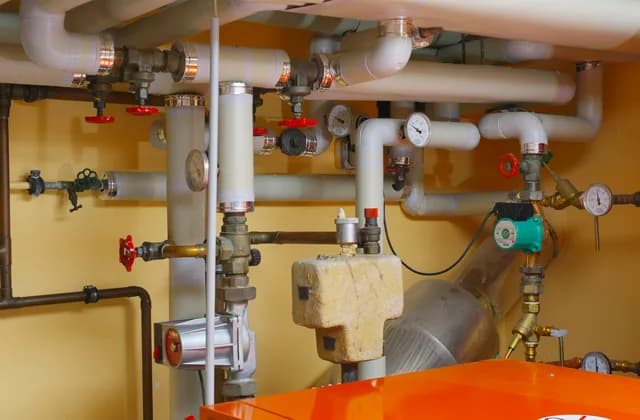
Gas has become part of everyday life in many South African homes. Load shedding and rising electricity costs pushed households towards gas hobs, gas water heaters and gas heaters, and a gas braai or fireplace is common in newer homes. Most of this runs on LP gas from cylinders standing outside the house; a few areas, including parts of Johannesburg, also have piped natural gas. Either way, the installation carries a fuel that can leak, catch fire or, from a badly vented appliance, fill a room with carbon monoxide.
That is why the rules are strict. Under the Pressure Equipment Regulations made in terms of the Occupational Health and Safety Act 85 of 1993, gas installation work must be done by a person registered with SAQCC Gas, and the installation must be signed off with a Certificate of Conformity. This guide covers how to size the job, how to check a registration, when you need the certificate, where cylinders may go, what a proper quote covers, the red flags, and when a free Hirovo post can help you find a gas installer nearby.
What kind of gas job do you need?
Swapping an empty cylinder and plumbing a gas geyser into the house are both “gas”, but they are very different jobs. Start by working out which one you have.
| Job | Certificate? | Who to use |
|---|---|---|
| Exchanging or refilling a cylinder | No installation certificate, but the cylinder must be in good condition. | A reputable gas supplier. Avoid backyard refilling from one cylinder into another. |
| Portable heater on its own small cylinder | Usually treated differently from a fixed installation; ask if unsure. | Follow the manual; ask a registered installer to check old hoses and regulators. |
| New gas hob, stove or oven | Yes, a Certificate of Conformity. | A registered gas practitioner. |
| Gas water heater (geyser) | Yes, plus plumbing work on the water side. | A registered gas practitioner, with a plumber if they do not do both. |
| Moving cylinders outside, new piping, a changeover valve | Yes. | A registered gas practitioner. |
| Built-in gas braai or fireplace | Yes. | A registered gas practitioner; ask about ventilation for indoor units. |
| Certificate for a house sale | That is the job. | A registered gas practitioner who inspects, tests and, if needed, fixes the installation. |
| Restaurant kitchen or larger installation | Yes; other approvals may also apply. | A practitioner registered for commercial work; ask the municipality about fire approvals. |
Why gas work in South Africa needs a registered installer
A person who is handy with pipes is not automatically allowed to work on gas. The Pressure Equipment Regulations require gas installation work to be done by an authorised person, which in practice means a gas practitioner registered with SAQCC Gas, the body that registers people for this work. Registration is personal, not a company certificate, and it comes in categories: the type of gas, such as LP gas or natural gas, and the type of installation, such as domestic or commercial. The installer should work to the relevant code of practice, SANS 10087-1 for most LP gas installations in homes and businesses, which covers things like cylinder placement, piping, ventilation and testing.
A plumbing registration with PIRB, an electrical registration or years of experience fitting appliances do not replace a gas registration. They are separate trades with separate paperwork, and a good installer will tell you plainly which parts of your job they may do.
How to check SAQCC Gas registration
- Ask to see the registration card and note the name, the registration number, the categories and the expiry date.
- Make sure the categories cover your job: an installer registered only for one type of gas or installation should not be signing for another.
- Check that the person on the card is the one who will sign the certificate, and that the business name matches the quote and invoice.
- If anything does not add up, ask SAQCC Gas, which keeps the register, how to confirm the registration.
- For bigger jobs, ask whether the business carries public liability insurance and for a reference from a recent customer.
When you need a gas Certificate of Conformity
The Certificate of Conformity confirms that a registered gas practitioner inspected and tested the installation and found it compliant on the day it was issued. It is often called a gas CoC, which is easy to confuse with the electrical Certificate of Compliance; they are two different documents from two different registered people. You should expect a gas certificate:
- after a new installation, such as a first gas hob or a gas water heater;
- after alterations: adding an appliance, moving the cylinders, extending the piping or fitting a changeover valve;
- when you sell a house with a fixed gas installation, because the sale agreement and the conveyancer will usually ask the seller for one. Ask the conveyancer early what they need and how recent it must be;
- when your insurer asks for it, often after a claim or when you add a gas appliance to the policy.
If you are buying a house with gas, ask to see the certificate before transfer, look at where the cylinders stand, and ask what was fixed to get the certificate. As with electrical certificates, it describes the installation on the day it was inspected; an appliance added later without a new certificate is not covered. Keep the certificate with your title deed and house papers.
Post a free job on Hirovo: what needs doing, your area and when. People nearby who do gas work can apply or message you, and you decide who to ask for a quote.
Post a free job →Where gas cylinders go: placement and safety basics
Most problems with home gas start with where the cylinders stand and how the gas reaches the appliance. The code sets minimum distances and conditions, and a registered installer should be able to explain them for your property without looking them up. You do not need to learn the numbers, but you should recognise the basics:
- Cylinders outside where possible, standing upright on a firm, level base, in a ventilated spot, often in a lockable cage to prevent theft.
- Away from things that can ignite or trap gas: drains, pits, doors and windows, air vents, electrical switches and plug points, and braai areas. LP gas is heavier than air, so a leak sinks and gathers in low places.
- Limits on gas indoors. The code restricts how much gas may be kept inside a home and where; a large cylinder in a kitchen cupboard next to the stove is a warning sign, not a convenience.
- Proper piping and hoses. Fixed piping, usually copper, into the house, with a shut-off valve near each appliance. Flexible hoses should be approved gas hose, as short as practical, in date and never run through a window, a wall cavity or under a door.
- A regulator and, if you use two cylinders, a changeover valve that is suited to the appliances and installed the right way round.
- Leak testing with a leak detection fluid or soapy water, and a pressure test of the installation. Never with a flame.
Gas water heaters and carbon monoxide
A gas water heater burns gas to heat water, and the combustion gases must go somewhere safe. Indoor units need a proper flue and ventilation, and some types may not be installed in certain rooms, such as bathrooms or bedrooms; the installer should tell you what the code allows for the unit you have chosen. Badly vented appliances can produce carbon monoxide, a gas you cannot see or smell. Headaches, dizziness or drowsiness that ease when you go outside are a reason to switch the appliance off and call the installer. Where a gas appliance runs indoors, a carbon monoxide alarm is worth considering.
What sets the price of a gas installation
Any Rand figure you see online is someone else’s job. What you pay depends on:
- The appliance and how many: a single hob, a hob and oven, a water heater, a fireplace, or several at once.
- The distance from the cylinders to each appliance and how the pipe runs: along an outside wall, through brick, across a roof space.
- Parts: regulator, changeover valve, piping, isolation valves, hoses, a cylinder cage and, for water heaters, the flue.
- Whether you supply the appliance, and whether it is suitable for LP gas or natural gas. Some appliances need a conversion kit.
- Testing and the certificate, including any retest after repairs.
- Making good: sealing holes and repairing plaster or tiles.
- Call-out, travel and after-hours rates.
For anything more than a small repair, get at least two written quotes and compare them item by item. A cheaper quote that leaves out the certificate, the changeover valve or the making good is not cheaper.
What a proper written gas quote includes
A good quote is written and itemised. It lists the appliance and every part, the labour, the pressure and leak test, the Certificate of Conformity, where the cylinders will stand, who repairs walls afterwards, when work will start, how long the price is valid and when payment is due. If the installer will also do plumbing or electrical work, the quote should say so and name the certificates you will receive for each.
The Consumer Protection Act 68 of 2008 gives you rights as a customer: services must be done in a timely manner and to a reasonable standard of quality, and parts installed during a repair carry a warranty together with the labour to fit them. Raise any problem with the installer in writing first, with photos and dates. If that fails, your provincial consumer protection office or the National Consumer Commission can advise you on the next step.
Red flags when you hire a gas installer
Walk away from anyone who:
- cannot show a valid SAQCC Gas card, or shows one in somebody else’s name;
- says “you don’t need a certificate” for a new appliance or a moved cylinder;
- offers to sign a certificate without inspecting or testing, or for an installation somebody else did and they have not checked;
- wants to put a large cylinder inside, run a hose through a window, or use a garden hose or a hose clamp as a “quick fix”;
- checks for leaks with a flame;
- offers to refill your cylinder from another one on the spot;
- wants cash only with no invoice, a large deposit before any work, or pressures you to decide on the spot.
Questions to ask before you choose a gas installer
A short conversation tells you a lot. A good installer answers these without getting defensive:
- Which categories are you registered for, and will you sign the certificate yourself? The answer should match the card.
- Where will the cylinders go, and why there? Expect a reason based on the code, not on what is easiest.
- Is my appliance suitable for LP gas as it is? Especially for imported or second-hand appliances.
- How will you test the installation, and will I get the test results with the certificate?
- What happens if you find a problem with the existing installation? Agree that extra work is quoted and approved before it is done.
- How long is your workmanship guaranteed, and how do I reach you if something goes wrong?
Gas in rentals, sectional title and estates
If you rent, the fixed installation is usually the landlord’s responsibility, and you should not change it without written permission. Read your lease, report faults in writing with photos, and ask the landlord for a copy of the gas certificate if the property came with gas appliances. A portable heater you bring yourself is your responsibility: keep the hose and regulator in good condition and follow the manual.
In sectional title schemes and estates, cylinders often stand on common property, so the body corporate or home owners’ association may have conduct rules about where and how gas may be installed. Ask before you buy a gas appliance, not after. Some municipalities also have fire safety by-laws that require approval or a certificate for larger gas installations, for gas in certain types of buildings, or for storing more than a set quantity. If you run a business, a restaurant or a guesthouse, ask the municipality’s fire department what applies before the installer starts.
Gas, plumbing and electricity: who does what
Many gas jobs touch other trades. A gas water heater needs plumbing work on the water side, and a gas hob with an electric oven, or a unit with electric ignition, may need a new plug point or circuit. The gas practitioner certifies the gas; a plumber deals with the water side; any new electrical circuit needs a registered electrical person and an electrical Certificate of Compliance. Ask at quote stage who will do each part and which certificates you will receive, so nothing falls between them. For the electrical checks, see how to hire an electrician in South Africa.
When you compare gas with electric options, ask about running costs, how often cylinders will need exchanging for your household, and where you will keep the spares. A good installer will be honest about which appliances suit gas and which are better left electric.
Finding a gas installer with a free Hirovo post
Smaller gas jobs, such as a new hob, moving cylinders outside or checking an older installation, can be hard to book with large firms. A Hirovo post is a simple way to reach people nearby instead, and it is free. Describe the job, add photos of the appliance and where the cylinders stand, give your suburb rather than your street address, and say when you want the work done. People who do gas work can apply or message you in the app, and you choose who to invite for a quote. Hirovo is new in South Africa, so you may get only a few replies at first.
Be clear about what Hirovo is. It does not vet applicants or check SAQCC Gas registration, certificates or insurance, and it is not a gas company or an agency. The checks in this guide are yours to make, and only a registered gas practitioner should connect, alter or certify your installation. For help with the wording, see how to write a job post.
Before any gas work starts: the SAQCC Gas card, with categories that cover your job and a valid expiry date · the same name on the card, the quote and the invoice · a written, itemised quote that includes testing and the Certificate of Conformity · a clear answer on where the cylinders will stand · who does any plumbing or electrical work · the certificate and test results you will receive at the end.
In short
Work out what kind of gas job you have. Anything that connects, moves or alters a fixed gas installation needs a gas practitioner registered with SAQCC Gas for that category, and a Certificate of Conformity at the end. Check the card, get the quote in writing, make sure cylinders stand outside in a safe spot, keep the certificate with your house papers, and walk away from anyone who says the certificate is not needed or tests for leaks with a flame.