
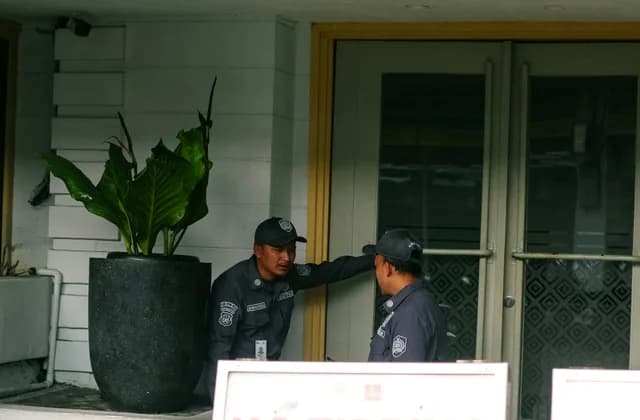
Walk past almost any shopping centre, office park, estate gate, hospital or construction site in South Africa and you will see a security officer. Security is one of the country’s biggest employers of people without a degree, and it is one of the few industries where a short, accredited training course can put you on a paid shift quickly. It is also one of the most regulated: nobody may guard anything for pay without being registered, and the grade on your certificate decides which posts you can take.
This guide is for people looking for security guard jobs in Gauteng, the Western Cape, KwaZulu-Natal and the rest of the country: how PSIRA registration works, what the grades mean, what armed work adds, how shifts and pay are set, and how to avoid the scams that target this industry more than most.
PSIRA registration: the legal gate for every security job
The Private Security Industry Regulatory Authority (PSIRA) regulates the industry under the Private Security Industry Regulation Act 56 of 2001. Two rules matter most for you. First, a person who provides a security service must be registered. Second, a security business must be registered too, and it may not employ unregistered officers. That is why every serious advert asks for your PSIRA number before anything else.
The usual route looks like this:
- Train with an accredited provider. Choose a training centre that is accredited for the grade you want. Ask to see its accreditation and verify it; a school that cannot show it is wasting your money.
- Pass the grade. Grades are done in order, starting with Grade E. Keep your results and attendance records.
- Apply for registration. Registration involves your ID document, proof of training and fingerprints for a criminal record check. The Act requires applicants to be South African citizens or permanent residents; if you are not, ask PSIRA directly about your situation before paying for training.
- Keep it active. Your registration can lapse or be suspended. An employer will check that it is valid on the day you start, not just that you once held it. Check your own status regularly and keep your details up to date.
A criminal record does not automatically end every application, but some offences disqualify you. If you have a record, find out from PSIRA before you pay for training rather than after.
PSIRA grades E to A: what each one lets you do
The grades are cumulative training levels. You will see them in every advert, often as “Grade C minimum” or “Grade D with good English”. The table gives the typical use of each one; the exact duties on a post are set by the employer and the client.
| Grade | Typical work | Where you’ll see it asked for |
|---|---|---|
| E | Entry level: access control, gate duty, patrols, observation, writing up the occurrence book | Estates, schools, factories, construction sites, night guarding |
| D | More responsibility on a post: searching, controlling access to sensitive areas, dealing with the public | Shopping centres, office parks, hospitals, retail |
| C | Leading a small team on a site; often the minimum for armed response and higher-risk posts | Site supervisor posts, armed response, mines and industrial sites |
| B | Supervising several sites or larger teams, scheduling, incident management | Area supervisor, shift commander |
| A | Management and planning of security operations | Operations and contract managers |
A higher grade opens more posts, but it is not a promise of more pay on its own. Employers pay for the post you fill. If you hold Grade C and take a Grade E gate post, expect to be paid as a gate guard. What the higher grade does is let you move up when a supervisor post opens, and many companies promote from inside.
Kinds of security work: guarding, control rooms, armed response
Static guarding
The largest group of jobs. You hold a post at a gate, reception, loading bay or perimeter, check people and vehicles in and out, patrol on a schedule and record everything in the occurrence book. Estates in Johannesburg’s northern suburbs, Pretoria East and Cape Town’s southern and northern suburbs employ large teams, as do industrial areas in Germiston, Midrand, Pinetown and Epping.
Retail and loss prevention
Shopping centres and stores want officers who can handle the public calmly, work with CCTV operators and follow a store’s procedures for suspected theft. You need to know what you may and may not do when you suspect someone: a wrongful search or detention is a legal problem for you and the employer.
Control room and CCTV
Monitoring cameras and alarms, dispatching patrol vehicles and logging events. The work suits people who concentrate well for long shifts and are comfortable with computers. Accuracy in logging matters as much as speed.
Armed response and reaction
Responding to alarm activations at homes and businesses, usually in a vehicle, usually armed. Expect to need a higher grade, a valid driving licence and a firearm competency certificate. Many companies also ask for experience in guarding first.
Events and specialised work
Stadiums, concerts and festivals use large numbers of officers for short periods. Events work can be a way in, but check that the company is registered and that the shift pay is agreed in writing before the day. Cash-in-transit and VIP protection are specialised and need extra training and vetting.
Create a free Hirovo profile, add security to your skills, set the area you can travel to and list your PSIRA grade. Employers who post near you can see your profile and message you in the app.
Create a free profile →Firearm competency: what armed security jobs add
An armed post needs more than a PSIRA grade. Under the Firearms Control Act 60 of 2000, you must complete training with an accredited firearm training provider for the kind of firearm you will carry and for business use, and then apply to the South African Police Service for a competency certificate. Company firearms are licensed to the security business, not to you; you carry them under the employer’s licence and its procedures.
Three practical points. The process takes time and includes background checks, so start early if you want armed work. Competency is specific to the type of firearm, so a handgun competency does not cover a shotgun or rifle. And the employer should have written procedures for the safe, the register and handing over weapons at shift change; if it does not, that is a sign about how the rest of the company is run.
Shifts, overtime and how security pay is set
Security is shift work. Twelve-hour shifts are common, as are night shifts and weekends. Before you accept, find out:
- Which minimum rates apply. Wages and conditions for security officers are set through the private security sector’s bargaining arrangements, usually by grade and sometimes by area. The national minimum wage is the floor for everyone and is reviewed every year, usually from 1 March. We do not quote amounts because they change; check the current rates with the Department of Employment and Labour and ask the employer which agreement it applies.
- How hours and overtime are counted. The Basic Conditions of Employment Act 75 of 1997 (BCEA) sets general rules on ordinary hours, overtime, night work and Sundays, and sector agreements can set specific ones for security. A payslip that shows one flat amount with no hours is a red flag.
- Deductions. Deductions for uniform, equipment or “damages” must follow the law; they cannot simply be taken at the employer’s discretion. UIF contributions should be deducted and paid over.
- Transport at night. Shift changes at 6 pm and 6 am matter when taxis are not running. Ask how you will get to and from site.
- Where you will be posted. Many companies move officers between sites. Make sure the sites are within reach from where you live.
Before you accept a security job, check:
- The company’s PSIRA registration is valid (verify it with PSIRA, not only on a letterhead).
- You have a written contract or letter of appointment with your grade, post, hours and rate.
- Uniform and equipment are issued by the company; you are not asked to pay up front.
- UIF is deducted and your payslip shows hours, overtime and deductions.
- For armed posts: the firearm procedures, register and training are in place.
- Nobody has asked for money to “reserve” the job or to “speed up” your PSIRA registration.
Security job scams and fake PSIRA certificates
Because so many people want security work, scammers target this industry heavily. The most common patterns are:
- Selling certificates. Someone offers PSIRA grades or a registration “without the course”. The certificate will not match PSIRA’s records, the employer’s check will fail, and using a fraudulent document can end your chances of registration.
- Pay-to-start jobs. An advert with a phone number only, a promise of immediate placement and a request for money for uniform, a training slot or “admin”. Legitimate security companies do not charge you to start work.
- Training schools that guarantee jobs. A school can train you; it cannot guarantee that a company will hire you. Be careful with anyone who ties payment for a course to a promised post.
- Collecting documents. Someone asks for copies of your ID document, PSIRA certificate and bank details before any interview. Share documents only with a company whose registration you have checked.
Writing an application security employers read
A security operations manager reads dozens of CVs for each post. Put what they are checking at the top:
- PSIRA grade and registration number, and that it is active.
- Firearm competency and the type of firearm, if you hold it.
- Driving licence code, if you have one; patrol and reaction work often need it.
- Your experience in site words: “access control at a residential estate, 400 units, 2 years; night shift” says more than a company name.
- Where you live and which areas you can reach, and whether you can work nights and weekends.
- A supervisor who will give a reference. In security, a reliable record matters as much as the certificate.
Employers notice officers who report clearly and calmly, so mention any report writing or control room logging you have done. If you are also looking at other trades, our guide to electrician jobs in South Africa explains a very different route into skilled work, and the general security guard jobs guide covers how the job works in other countries.
How Hirovo works for security officers
Hirovo is a free jobs and local services marketplace. It is new in South Africa, so there may be few security posts in your area on it yet; it is worth setting up now so that employers who start posting near you can find you.
- Make a free profile. Add security as a skill, write your grade and experience in your own words, and set the area you can travel to.
- Apply and message in the app. When an employer posts nearby, you can apply and talk to them directly.
- Check them as they check you. Hirovo does not vet employers, check PSIRA registrations or verify certificates. Ask for the company’s PSIRA number and confirm it before you share documents or start a shift.
In short
Every security job in South Africa starts with PSIRA registration, and the grade you hold decides which posts you can take. Train with an accredited provider, register, keep your registration active, and add firearm competency if you want armed work. Before you accept a post, check the company’s registration, your written terms and how your hours are paid. Never pay for a job, a uniform or a certificate that skips the training. Then put your grade, experience and area where employers can see them.