
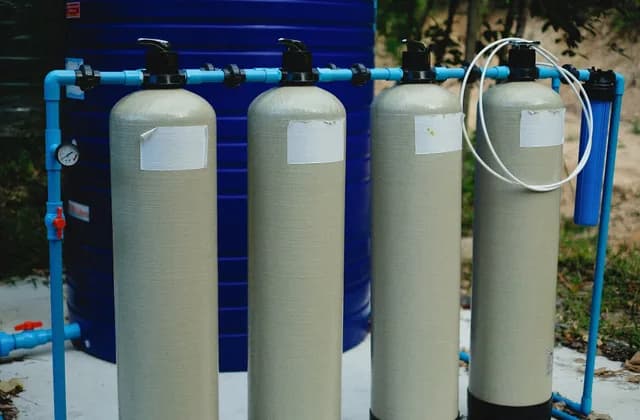
Water that tastes of chlorine, a well you have never tested, a new kitchen with an empty cabinet under the sink: these are the moments when water filter installation lands on the list. The shelves mix very different things, though. A faucet-mounted filter, an under-sink carbon unit, a reverse osmosis system and a whole-house filter do not do the same job, and they do not need the same installation.
This guide helps you choose by what is in your water. It explains what each system needs at installation, which certifications to look for, what to ask before anyone cuts into a pipe and what sets the cost. It is about the filter system. If the trouble is a leaking valve, old pipework or low pressure across the house, start with our guide on how to hire a plumber. If a system you already have, such as a pumped unit or a fridge dispenser, has broken down, the warranty and call-out questions are the same as in our guide to appliance repair.
Before water filter installation: find out what is in your water
No single system removes everything. Choosing one without knowing what your water carries is buying blind, so start with where the water comes from.
City water: in the US, your water utility publishes an annual Consumer Confidence Report, also called a water quality report. It lists what was found in the water it supplies. Read it first, on the utility’s website or with your bill. If you have a specific concern, ask the utility before you buy anything.
Private well: here the responsibility is yours. Nobody tests a private well for you. Have the water tested by a state-certified laboratory, so you know what needs treating before you pick a system.
The pipes in between: what comes out of your faucet can also depend on the plumbing between the main and the sink. A filter treats only the water that passes through it, and only for what it is certified to reduce. It does not fix the plumbing. It is not a health treatment either: it does not prevent or cure illness.
Reverse osmosis, under-sink or whole-house: what each system does
Use this table to start the conversation with a seller or an installer. What a specific model reduces is in its certification and its manual, so read those before you buy.
| System | What it targets | What installation needs | Upkeep |
|---|---|---|---|
| Faucet-mounted filter | Taste, odor and other claims the model is certified for. | Fits onto the faucet spout. Little or no work. | Cartridge change on the manufacturer’s schedule. |
| Under-sink carbon filter | Filtered drinking water without using counter space. | Connection on the cold line, cabinet space and possibly a separate faucet. | Cartridge changed inside the cabinet. |
| Under-sink reverse osmosis | Finer filtration, including removal of minerals. | Cold line, drain connection that meets code, cabinet space. Tankless units may need power. | Several stages, each with its own schedule. |
| Whole-house sediment or carbon | Water entering the whole home, before it reaches any faucet. | Cuts into the main line. May need a permit and a licensed plumber. | Cartridge or media change as the manufacturer states. |
| Water softener | Hardness. It is not purification. | Main line, drain and power. Keep a drinking-water tap unsoftened if advised. | Follows its own manual. |
| UV system (wells) | Microorganisms, as the model is certified for. | Power and a place on the line. Ask whether a sediment filter goes before it. | Lamp and sleeve care as the manual states. |
Reverse osmosis for home: tank or tankless
A reverse osmosis system pushes water through a very fine membrane that holds back much of what is dissolved in it. Part of the water that goes in is sent to the drain, and the water that comes out has fewer minerals. How much goes to the drain and what the membrane reduces differ by model, and both are in the specification sheet. A tank system stores filtered water under the sink. A tankless system filters on demand and may need power. Reverse osmosis makes sense when you know what you need to take out. If the only issue is chlorine taste in city water, a simpler carbon filter may be enough.
Whole-house filter and softener: two different jobs
A whole-house filter treats the water entering the home. A softener deals with hardness, which affects scale on fixtures and appliances, and it is not a filter for drinking water. They can be sold together, but they answer different questions. On a well, check whether the lab report points to sediment, hardness or microorganisms before you combine systems.
Certification: what NSF/ANSI standards mean
In the US, look for independent certification to NSF/ANSI standards. Each standard covers a different kind of claim:
| Standard | What it covers |
|---|---|
| NSF/ANSI 42 | Aesthetic effects, such as chlorine taste and odor. |
| NSF/ANSI 53 | Health-related contaminants. |
| NSF/ANSI 58 | Reverse osmosis systems. |
| NSF/ANSI 401 | Emerging contaminants. |
Certification is per claim, not per product. A unit certified to standard 42 for chlorine is not thereby certified to reduce anything else. Check the certifier’s listing for the exact contaminants your model is certified to reduce, and compare that list with your water report. The WQA Gold Seal is another certification mark you may see.
Safety: After installation, check the connections for a few days. If you see drips or damp under the sink, close the unit’s supply valve and call whoever installed it. A unit that needs power, such as a pumped or tankless system, needs a grounded outlet kept away from water. Do not run it off an extension cord. If there is no suitable outlet, have an electrician add one.
How water filter installation works
Each system asks for something different. Knowing it in advance avoids surprises on the day.
Faucet-mounted: the filter screws onto the spout, and you may be able to fit it yourself by following the manual. Check that the adapter in the box matches your faucet.
Under-sink carbon and reverse osmosis: the work happens inside the cabinet. The installer shuts off the cold supply, fits a connection on the line and mounts the housing. A separate faucet may need a hole in the sink or countertop, so say what the countertop is made of. Stone and steel need different tools and care. A reverse osmosis drain connection must meet local plumbing code, and some codes require an air-gap faucet. Clear the cabinet before the visit.
Whole-house: the system cuts into the main water line near where it enters the home. Depending on your jurisdiction, this work may need a permit and a licensed plumber. Check with your local building department, and ask the installer who pulls the permit if one applies. Ask where the bypass valves will be, so the system can be isolated during a filter change.
Renting: get the landlord’s permission before anyone drills a countertop or taps a water line. Agree in writing what happens to the system and any holes when you move out.
If the visit turns up old pipework, a seized valve or a leak, that is plumbing work and should appear on the quote as a separate item.
Posting a request on Hirovo is free. Say which system you want, where it goes and your area. There may be no one registered for this work near you, and you may get no replies. Hirovo is not a party to the work; any agreement is between you and the person you choose.
Post a request →Filter changes and maintenance
Every filter and membrane has a replacement schedule, and the manufacturer sets it in the manual or on the packaging. An overdue filter stops doing its job and can become the problem itself. Write the date of each change where you will see it, and use the cartridge the manufacturer names for your model. A cartridge that merely fits may not carry the same certification.
If you pay for a filter change, ask whether it includes sanitizing the housing and the parts the water passes through. After a change, follow the manual on flushing before you drink the water.
If no water comes out after a change, do not take the unit apart. Check that the supply valve to the unit is open, that the cartridge is seated the way the manual shows and, for a powered unit, that it is plugged in. If that does not solve it, contact the manufacturer’s service line or the installer.
Water filter installation cost: what sets the price
A price on a website has not seen your kitchen or your main line. Until someone has, there is no fair figure for your job. These items move the number:
| Item | Why it moves the price | What to ask |
|---|---|---|
| Type of system | Faucet, under-sink, reverse osmosis and whole-house units need different parts and work. | Which model is in this price? |
| Drain connection | Reverse osmosis and softeners need a drain that meets code. | Where will the drain line go? Is an air gap needed? |
| Countertop and holes | A separate faucet may mean drilling stone, steel or laminate. | Will you drill? Who is responsible if the countertop cracks? |
| Main line work | A whole-house system cuts into the main and may need bypass valves. | Is a permit needed, and is it in the quote? |
| Power | Pumped, tankless and UV units need a suitable outlet. | Will I need an electrician first? |
| Filters and upkeep | The spending continues after the purchase. | Which cartridges does this model use, and where do I get them? |
| Visit | Coming to your home may be charged or included. | Is the visit charged? Is it deducted if I go ahead? |
In-home water tests and door-to-door sales
Some sellers offer a free water test at your home using electrolysis. Two electrodes go into a glass and the water turns brown. That does not prove your water is unsafe: the electrodes themselves cause the color. Do not decide on a purchase because of that result. Ask instead what a certified lab test or your utility’s report shows.
In the US, the FTC’s Cooling-Off Rule gives you three business days to cancel many sales made at your home. Ask for the contract and the cancellation form before the seller leaves.
UK: water fittings rules
In England and Wales, fittings connected to the mains should comply with the Water Supply (Water Fittings) Regulations 1999. WRAS approval is the common way to show a product meets them, so ask whether the unit and its fittings are WRAS approved. If you fit a softener, keep a drinking-water tap on unsoftened water. Elsewhere in the UK, ask your water supplier which rules apply. Under the Consumer Rights Act 2015, a service has to be carried out with reasonable care and skill, and a written quote gives you a clear record of what was agreed.
Quote, warranty and the final check
Ask for a written quote that names the system, the filters, what the installation includes, any permit and when each part is paid. If you get more than one quote, compare them item by item. A lower total may leave out the drain connection, the faucet or the visit. Keep the quote, the manufacturer’s warranty terms and the invoice together.
At the end of the job, run the water, look at every connection and check that the faucet closes properly. Ask the installer to show you the unit’s supply valve, because that is the one you will close if you ever see damp.
In short
Start with the water, not the gadget: your utility’s Consumer Confidence Report for city water, a state-certified lab test for a well. Choose the system by what you need to reduce and by the space you have. Match its NSF/ANSI certification to your water report, check local code for drains and main line work, and get permission if you rent. Change filters on the manufacturer’s schedule, ignore electrolysis demos, and get a written quote that names every item.